
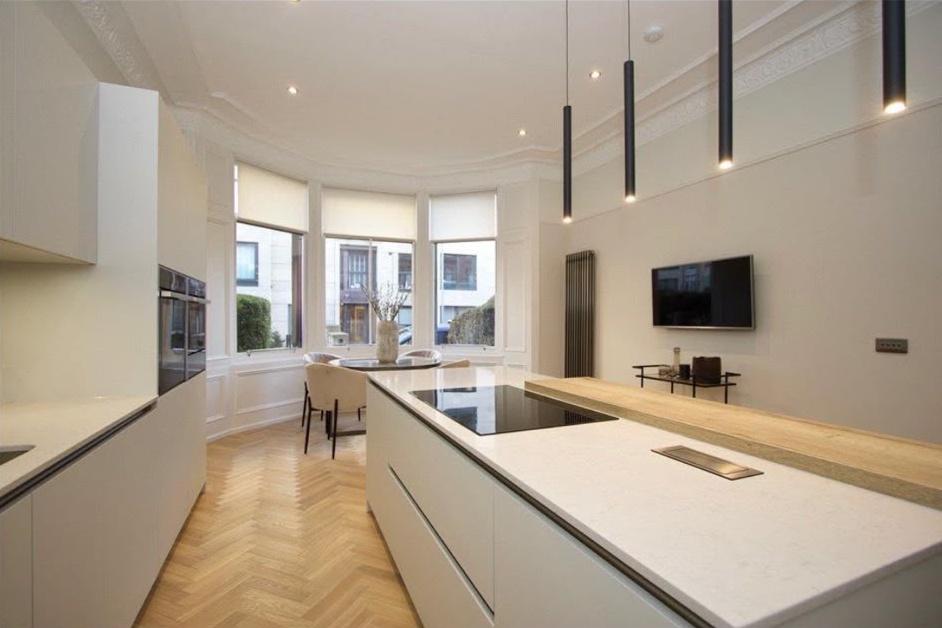
Skimming in Glasgow
Skimming and re-skimmingin GlasgowOld walls made new again
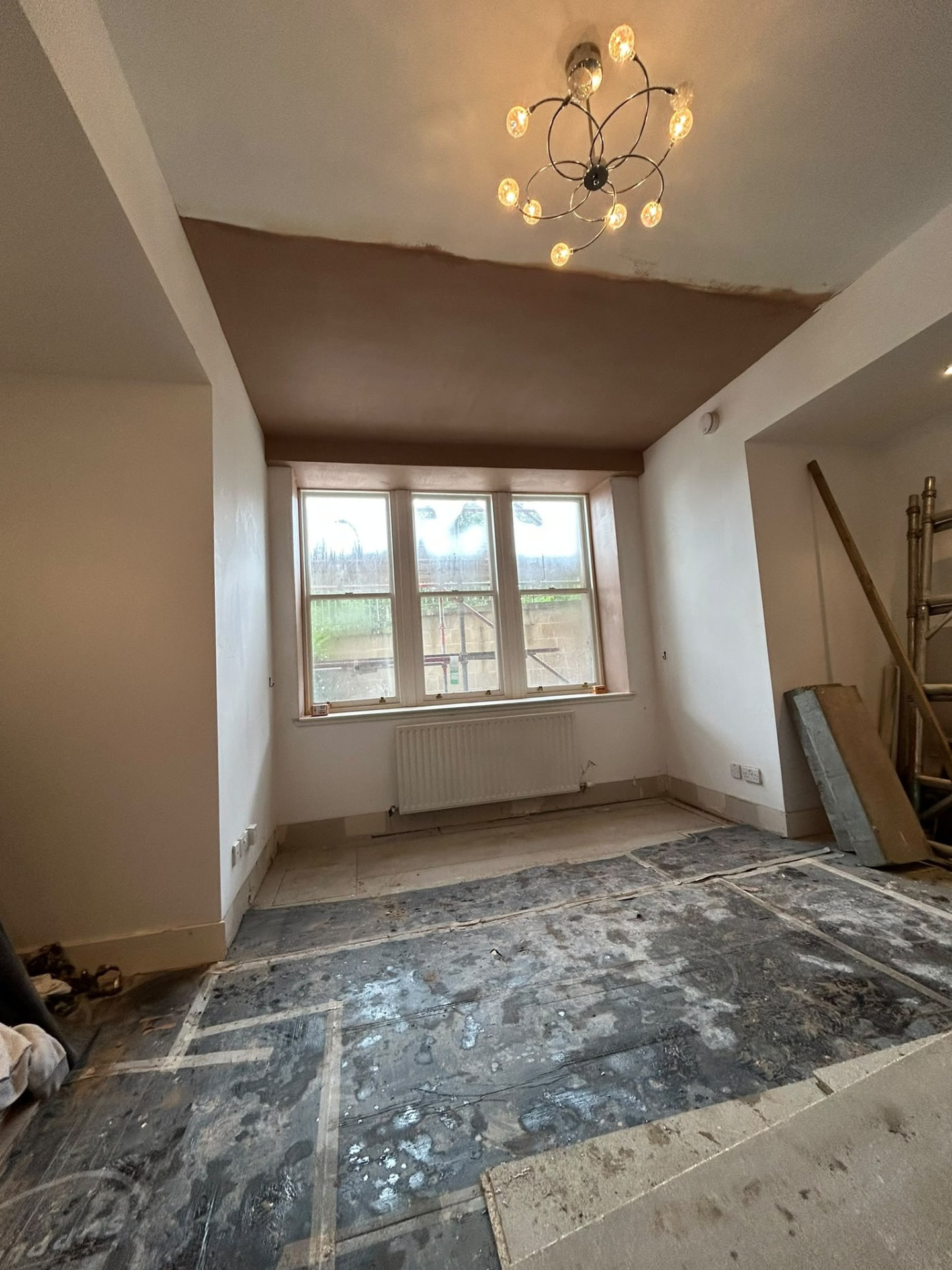
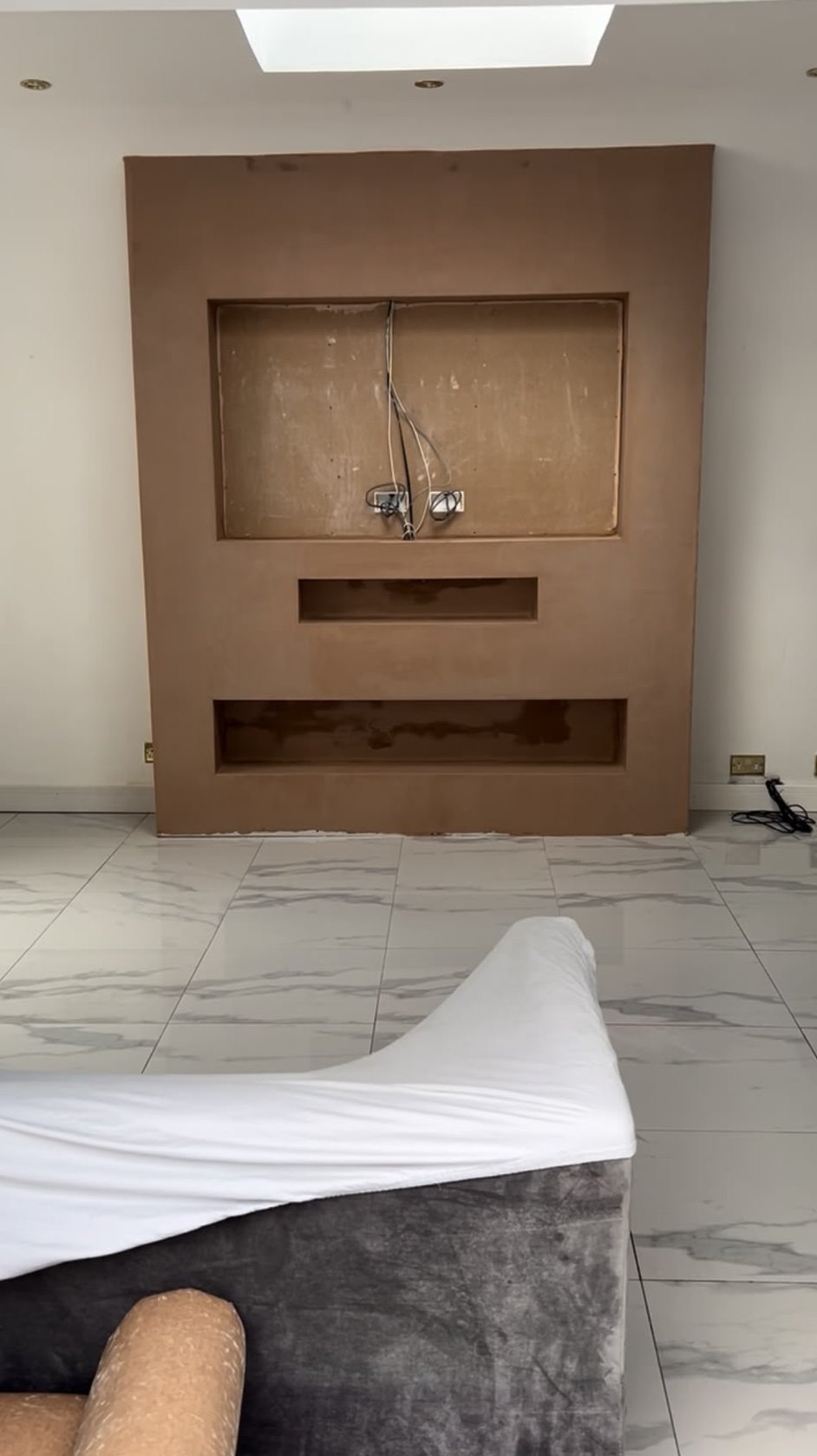
A thin coat of finish plaster over what you already have: the fastest, least disruptive way to turn a patched, rippled or artexed surface into a wall that looks like it was built yesterday.
5-star rated on MyBuilder (124 reviews)Free quotes, usually same day
22 years
On the trowel, time-served
5★ · 124
Verified MyBuilder reviews
£1 million
Public liability cover
1–2 years
Workmanship guarantee
Same day
Free quote turnaround
Service Overview
What skimming is and when it is the right call
Skimming is the application of a thin finish coat of plaster, a few millimetres, over an existing surface to make it flat and smooth. It is not the same as plastering a wall from scratch. Nothing is stripped back to brick, the room stays largely intact, and most single rooms are finished in a day or two.
It is the right answer when the wall or ceiling underneath is fundamentally sound but the surface has stopped being presentable: layers of old paint and filler, wallpaper damage, artex, patch repairs from previous trades, or a ceiling that has simply been decorated one too many times.
It is the wrong answer when the surface underneath is not sound. Blown plaster, active damp, loose material and heavy contamination all have to be dealt with first, because a skim coat inherits the stability of what it is applied to. Ryan will tell you which of the two you have before quoting, not after starting.
The finish is worked and polished up on the trowel as it sets, so what you get is a dense, flat surface ready for a mist coat, not a rough coat that a decorator has to sand into shape.
Who it is for
- Homeowners who stripped wallpaper and uncovered a mess underneath
- Anyone with artex or textured ceilings they want gone visually
- Landlords turning a property around quickly between tenants
- People selling who need every room to photograph and view well
When it is needed
- Walls covered in filler, old adhesive residue or wallpaper backing
- Ceilings with visible joints, cracks or a heavily textured finish
- Surfaces where new paint keeps showing every ripple and repair
- Rooms where several patch repairs have left a patchwork finish
The Cost Of Waiting
Why decorating over it never works
Paint is not a levelling product. It is roughly a tenth of a millimetre thick, so it follows every hollow, ridge and filler edge underneath it and, in low winter light or under downlighters, actually exaggerates them. That is why a freshly painted tired wall so often looks worse than it did before.
The bigger risk is what the old surface does next. Layers of distemper, unstable paint, or wallpaper paste residue are all weak bonds. New emulsion pulls at them, and within a season you get flaking, blistering and peeling patches spreading outwards from the worst areas, and each of those repairs shows.
Financially, repeat decorating is the slow leak. Two or three attempts at a room, in materials and time, quickly matches the cost of skimming it once and never thinking about it again. Skim it and the same room takes paint cleanly for years.
Common mistakes that make it worse
Skimming straight over unstable paint
Chalky distemper, gloss and flaking emulsion all need sealing, keying or removing first. Skip that and the new coat debonds with the old paint still attached to the back of it.
Ignoring the cause of a crack
A crack that keeps returning is movement, not cosmetics. Skimming over it hides the symptom for a few months and hides nothing after that.
Trying to skim wet walls
Fresh plaster over a damp background will not cure properly and can salt through the finish. The moisture source has to be dealt with first.
Leaving fixtures and fittings in place
Rails, radiators and socket faces left on force a plasterer to stop short, and the visible line where the skim ends is permanent.
Our Process
Five steps from first callto a guaranteed finish
- 01
Step 1 – Inspection
Every surface is checked for hollowness, loose material, unstable paint and moisture, so it is clear from the start whether a skim is enough or whether repair work has to come first.
- 02
Step 2 – Diagnosis and quote
You get a clear scope, which walls, which ceilings, what preparation is included, plus a fixed price on smaller jobs or a day rate on larger ones. Free, and usually back the same day.
- 03
Step 3 – Preparation
Floors and fittings sheeted, loose material removed, cracks cut out and made good, unstable and glossy surfaces sealed or bonded, and joints scrimmed so the new coat has a stable, even base.
- 04
Step 4 – Skim coats applied
Two thin coats of finish plaster, applied and flattened, then troweled up through the set so the finish densifies flat. Angles and reveals are cut in sharp rather than rounded off.
- 05
Step 5 – Verification, clean-up and guarantee
Surfaces checked under a light for shadowing, waste bagged and removed, room swept, and the work covered by a 1–2 year workmanship guarantee with drying advice before you decorate.
What You Get
The difference it makes,stated plainly
Fast, most rooms in a day or two
No stripping back to brick, no rebuilding. The room stays intact and comes back usable quickly.
Cheaper than full re-plastering
You are paying for a finish coat and preparation, not for undercoats, waste removal and days of labour.
Ends the repeat decorating cycle
One flat, dense surface takes paint cleanly instead of exposing every flaw underneath it, year after year.
Instant lift in how a room reads
Flat walls and a clean, seamless ceiling make a room look renovated even before it is painted.
Guaranteed and insured
1–2 year workmanship guarantee on adhesion, blistering and debonding, with £1 million public liability cover behind the work.
Clean, contained work
Sheeted floors, bagged waste and a swept room at the end of each day, in an occupied home.
In Detail
The detail behind a re-skim that lasts
Almost all skim failures trace back to the background rather than the plaster. That is why the first job on any re-skim is establishing what is behind the paint. A tapped wall tells you where it is hollow; a scrape tells you whether the coating is chalky; a wet finger on old distemper tells you it will never hold a skim without being removed or bound. Different backgrounds then get different treatment, and this is where cheap jobs cut corners.
Painted surfaces need grip. Sound emulsion is keyed and sealed; gloss and eggshell get abraded and a bonding primer; unstable or chalky coatings are stripped or stabilised. Plasterboard needs joints scrimmed and any board movement addressed. Old artex needs either a bonding coat suited to textured surfaces or the high spots knocked back so the skim thickness stays even; a thick skim over deep texture is more likely to crack.
The plaster itself is a two-coat, thin application. The first coat fills and grips, the second flattens, and the trowel work is timed to the set: too early and you drag the surface, too late and you burnish rather than close it. The result should be flat enough that a light held against the wall throws no shadow lines, and dense enough that it does not dust when you rub it.
Materials used
Multi-finish plaster
The standard finish coat for re-skimming mixed backgrounds: masonry, old plaster, and repaired areas in the same room.
Board finish plaster
Used where the background is plasterboard, giving the right suction match over paper-faced boards.
Bonding primers and PVA
Grit-loaded primers for gloss and dense painted surfaces; diluted PVA to control suction on absorbent backgrounds.
Scrim tape and jointing compound
Applied across board joints and repaired cracks so movement does not telegraph a hairline through the new finish.
Variations of the work
Wall re-skimming
The most common request, one wall, a chimney breast, or all four walls in a room brought back to smooth.
Ceiling re-skimming
Ceilings skimmed to remove joints, cracks and old texture. Ceilings are more demanding than walls and show more under light.
Skimming over artex
Textured ceilings covered and flattened where the texture is stable, often the cleanest, least invasive way to lose artex.
Skimming after board repairs
New plasterboard patches, chases and openings blended into the surrounding surface with a full skim over the whole plane.
Where this work typically applies
- Tenement and period rooms with decades of paint layers
- Ceilings marked by old joints, cracking or previous water damage
- Rooms where wallpaper removal has torn the surface
- Rental turnarounds needing a fast, high-impact improvement
- Kitchen and bathroom refits where new units need a true wall
- Pre-sale refreshes across a whole flat or house
Domestic work is the priority: single rooms through to full house and flat refurbishments. Larger commercial contracts are not the focus, so your job is not queued behind a site.
Questions, Answered Straight
Skimming & Re-Skimming in Glasgow- the things people ask
How much does re-skimming cost in Glasgow?
Smaller jobs, a single wall, a ceiling, one room, are quoted at a fixed price for the job so the figure cannot move. Bigger jobs across several rooms are usually priced on a day rate. Room sizes and a couple of photos are normally enough to get a real number back the same day.
How long does skimming take?
A typical room of walls and ceiling is usually a one to two day job. Individual ceilings and single walls are often a single day. Additional preparation, crack repairs, stripping unstable paint, board patching, adds time and will be flagged in the quote, not sprung on you later.
Can you skim over artex?
Usually yes, provided the artex is stable and firmly bonded. Deeper textures get knocked back or treated with a bonding coat first so the skim thickness stays consistent. Where the texture is loose or the ceiling is unsound, overboarding is the better route and Ryan will say so.
Can you skim over wallpaper?
No. Wallpaper is a weak bond and the moisture in the plaster lifts it, taking your new finish with it. Paper comes off and the surface underneath is prepared properly, that is what makes the difference between a skim that lasts and one that blisters.
How long before I can decorate a skimmed wall?
Anywhere from a few days to a couple of weeks depending on the room, the season and the ventilation. Wait until the colour is uniform right across the surface, then start with a thinned mist coat before full-strength emulsion.
Is skimming guaranteed?
Yes, with a 1 to 2 year workmanship guarantee covering adhesion issues, blistering, debonding and plaster coming away from the wall. Structural movement, settlement cracking, shrinkage and damp caused by ventilation habits are outside that cover.
How long does a re-skim last?
Applied to a sound, properly prepared background, a skim coat is a permanent finish, it is the same material used on new plastering. What shortens its life is an unstable background or an unresolved damp or movement problem, which is exactly why the inspection stage matters.
Will the house be full of dust?
Plastering itself is a wet trade, so it produces far less airborne dust than sanding. Floors and fittings are sheeted, waste is bagged as it goes, and the room is swept at the end of each day. The tidiness is one of the most common comments in the 124 MyBuilder reviews.
Do you take on single-wall jobs?
Yes. Plenty of jobs are one wall or one ceiling, and they are quoted at a fixed price like any other. Small jobs get the same preparation and the same finish as full rooms.
Which areas do you re-skim in?
Glasgow and the surrounding towns: Paisley, Rutherglen, Bearsden, Clydebank, Bishopbriggs, Cambuslang, Renfrew and Newton Mearns among them. Just outside? Ask, it is usually still workable.
Related Work
Often done at the same time
Plastering
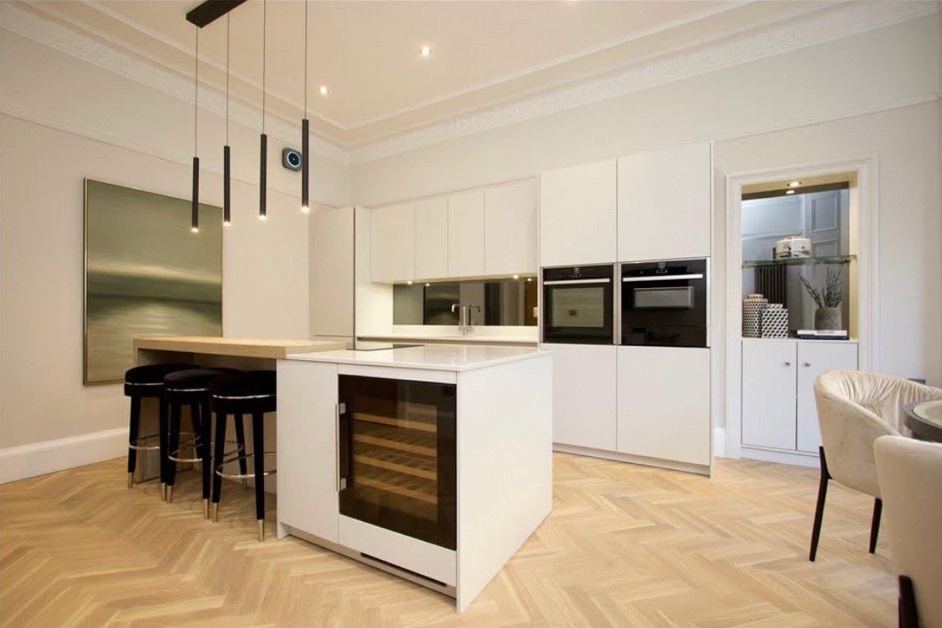
Rooms handed back straight, smooth and ready for paint, without weeks of disruption, without dust through the whole house, and without chasing a tradesman who stopped answering.
See this service →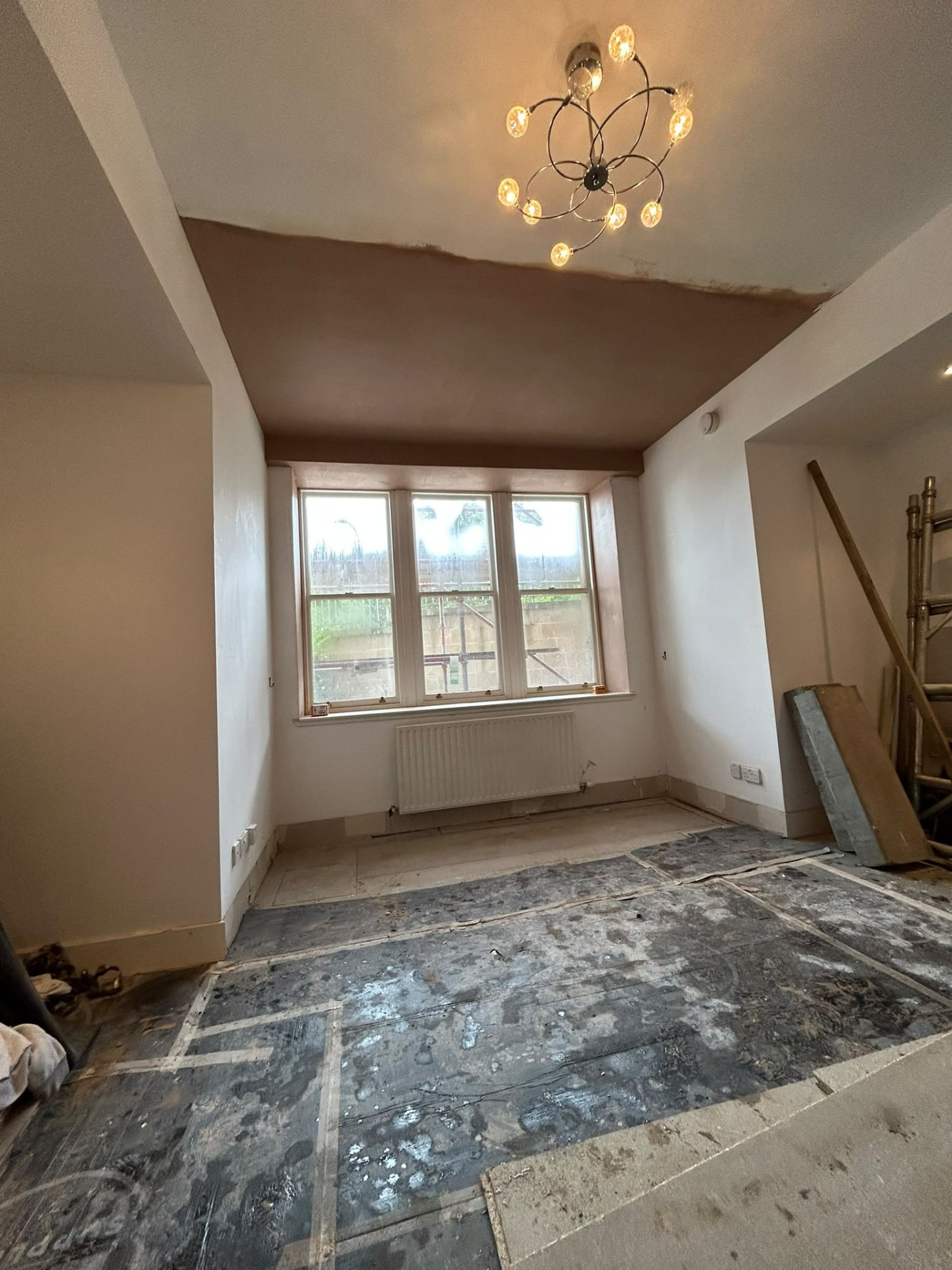
Artex Removal
Swirls, stipple and combed patterns gone for good; covered or removed, then skimmed to a flat surface that instantly takes ten years off the room.
See this service →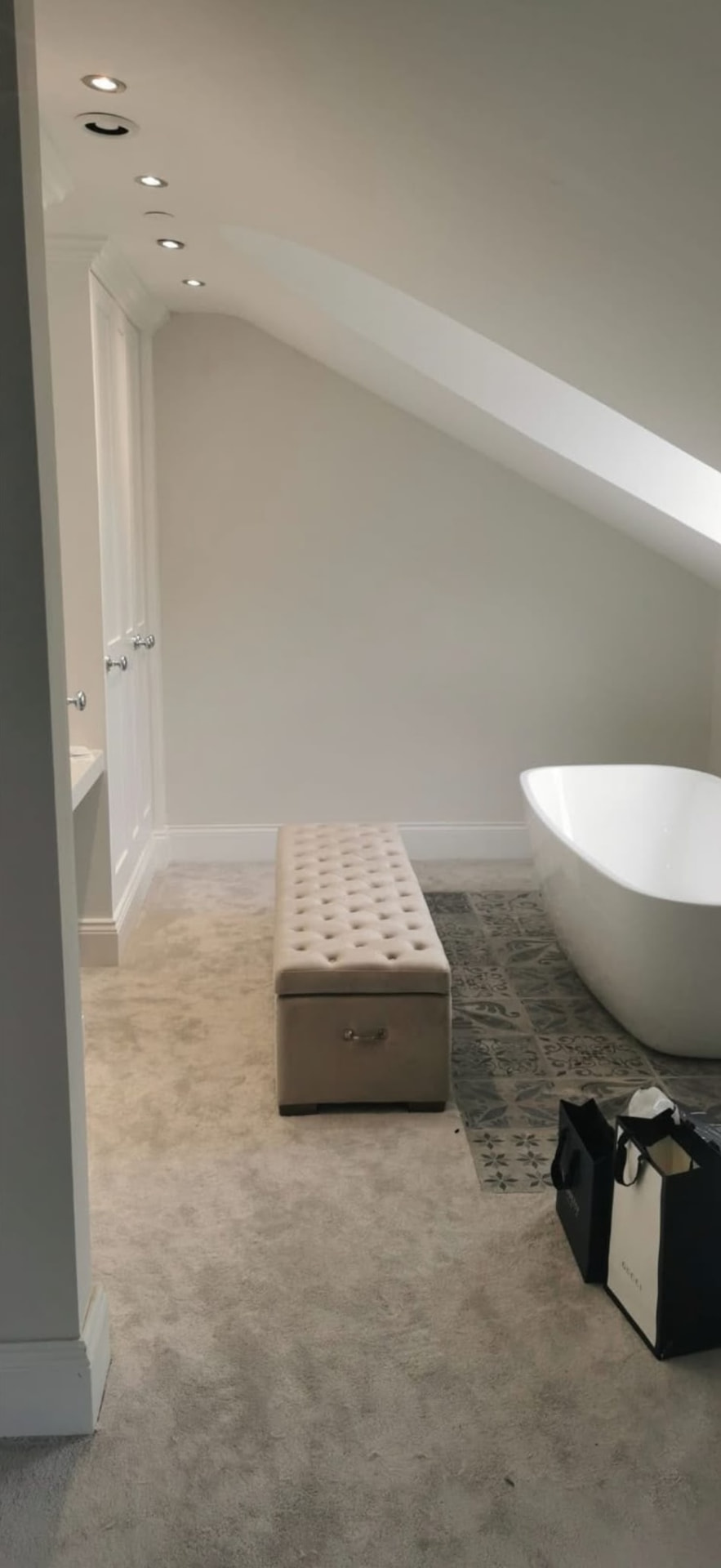
Ceiling Repairs
A ceiling that is coming away is not a decorating job. It gets stabilised, repaired and skimmed back to a single seamless surface, so you stop watching it and start forgetting about it.
See this service →
Skimming & Re-Skimming across the west of Scotland
Covering Glasgow, Paisley, Rutherglen, Bearsden, Clydebank, Bishopbriggs, Cambuslang, Renfrew, Newton Mearns and the surrounding towns. You can also see recent work, read the customer reviews, find out more about Ryan or head back to the homepage.
The Guarantee
What the 1–2 year workmanship guarantee actually covers
Every job carries £1 million public liability cover and a written 1–2 year workmanship guarantee. The terms are set out plainly below, so you know exactly where you stand before any work starts.
Covered
- Adhesion issues, where the plaster fails to bond as it should
- Blistering in the finished surface
- Debonding, commonly called blown plaster
- Plaster coming away from the wall
Not covered
- Structural movement in the building
- Cosmetic settlement cracking
- Shrinkage
- Damp or moisture caused by occupancy, such as a lack of ventilation or drying washing indoors
- Overboarding onto an existing unstable ceiling, which cannot be guaranteed because of the risk of movement behind the new boards
Next Step
Tired walls, sortedin a day or two
Send the room details and get a free quote back, usually the same day. Fixed pricing on smaller jobs, £1 million public liability cover, and a 1–2 year workmanship guarantee.
- 22 years on the trowel, 10 self-employed
- 5-star rated on MyBuilder across 124 reviews
- £1 million public liability cover
- 1–2 year workmanship guarantee on workmanship
Request Your Free Quote
Free, no-obligation quotes, usually turned around the same day.
No obligation. No pressure. Straight answer on price and timings.