
Ceiling Repairs in Glasgow
Ceiling repairs in GlasgowCracked, sagging orwater-damaged: made sound
A ceiling that is coming away is not a decorating job. It gets stabilised, repaired and skimmed back to a single seamless surface, so you stop watching it and start forgetting about it.
5-star rated on MyBuilder (124 reviews)Free quotes, usually same day
22 years
On the trowel, time-served
5★ · 124
Verified MyBuilder reviews
£1 million
Public liability cover
1–2 years
Workmanship guarantee
Same day
Free quote turnaround
Service Overview
What ceiling repair involves
Ceiling repair covers everything from a single crack across a bedroom to a lath-and-plaster ceiling that has partly let go after a leak. The common thread is that the surface has stopped doing its job, and the fix has to address why, not just what you can see.
In Glasgow's older housing stock, most ceiling problems are one of three things: original lath and plaster losing its key and dropping away from the joists, plasterboard ceilings cracking along joints and fixings, or water damage from a bathroom, a flat above or a roof issue softening and staining the surface.
The repair route follows the diagnosis. Localised damage is cut out, made good and skimmed into the surrounding surface. Widespread failure is usually overboarded or, where the existing ceiling is unstable, taken down and replaced. Ryan is straight about the difference, including the fact that overboarding onto an unstable ceiling cannot be guaranteed.
Ceilings are the least forgiving surface in a house, because daylight and downlighters both rake across them. That is why the finish coat matters as much as the repair underneath it.
Who it is for
- Homeowners watching a crack get longer every month
- Anyone with a bulge, sag or hollow patch overhead
- People dealing with the aftermath of a leak from above
- Landlords and letting agents who need a ceiling made safe and presentable
When it is needed
- A crack keeps reopening after being filled
- A section of ceiling sounds hollow or flexes when pushed
- There is a visible sag, bulge or drop in the ceiling line
- Brown staining, blistering or soft plaster after a leak
- Fine debris or dust appearing on the floor beneath the ceiling
The Cost Of Waiting
What happens if you leave a failing ceiling
A failing ceiling is the one defect in a house that can injure somebody. Lath and plaster is heavy, and when a keyed ceiling finally lets go it does not come away politely, it comes down in slabs, usually onto furniture, flooring and anything else in the room. The warning signs are hollowness, sag and dust, and they usually run for months before the failure.
Water damage compounds quietly. Even after the leak is fixed, the plaster that got wet has lost strength, the fixings around it may have corroded, and any timber above stays damp longer than the surface suggests. Painting over a stain seals the appearance and leaves the weakness exactly where it was.
Cost escalates the same way. A single cut-out and skim repair caught early is a modest job. The same ceiling left until it drops becomes a strip-out, a skip, replacement boards, a full re-skim, and quite possibly flooring and decorating below it. And insurance conversations get harder when the damage was visibly developing.
Common mistakes that make it worse
Filling a structural crack
If a crack keeps returning, something is moving. Filler is cosmetic; it does nothing about the cause and it reopens on the same line every time.
Painting over water stains
Stain-block hides the mark but does nothing about softened plaster, corroded fixings or damp timber above. The stain also tends to bleed back through.
Overboarding a ceiling that is already moving
Adding weight to a ceiling that has lost its key accelerates the failure. Where the existing ceiling is unstable it needs taking down, not covering.
Repairing before the leak is fixed
A new ceiling under an unresolved leak fails twice as fast, and you pay for the same repair twice.
Our Process
Five steps from first callto a guaranteed finish
- 01
Step 1 – Inspection
The ceiling is sounded out for hollow areas, checked for sag and movement, and assessed for moisture, so the extent of the failure is known before anything is quoted.
- 02
Step 2 – Diagnosis
You get a plain explanation of what has happened, lost key, board movement, water damage or something structural, and which repair route is appropriate, including when the honest answer is a full replacement.
- 03
Step 3 – Stabilise and repair
Floors and furniture sheeted, loose and unsound material removed, cracks cut out, new plasterboard fitted where needed and fixed to solid timber, joints scrimmed and beads set.
- 04
Step 4 – Skim and blend
The repaired area is skimmed and, where necessary, the whole ceiling is re-skimmed so there is no visible line between old and new. Finished flat under the light rather than sanded flat.
- 05
Step 5 – Verification, clean-up and guarantee
The ceiling is checked under raking light, all waste is bagged and removed, the room is swept, and the workmanship carries a 1–2 year guarantee, with overboarding onto pre-existing unstable ceilings excluded, and said so upfront.
What You Get
The difference it makes,stated plainly
Safety restored
A ceiling that is dropping becomes a ceiling that is fixed to solid timber and going nowhere.
No visible repair line
Repairs are skimmed into the surrounding surface, or the whole ceiling is re-skimmed, so it reads as one plane.
Damage stopped from spreading
Catching a failure early keeps it to a patch repair instead of a full strip-out, skip and re-board.
Honest diagnosis
If overboarding is a bad idea for your ceiling, you will be told that, including where the guarantee cannot apply.
Fast turnaround
Most single-ceiling repairs are a one to two day job, with free quotes usually turned around the same day.
Insured and guaranteed
£1 million public liability cover, and a 1–2 year workmanship guarantee on the plastering carried out.
In Detail
Ceiling types, failure modes and the right repair
Lath and plaster ceilings, standard in Glasgow tenements and pre-war houses, work by squeezing wet plaster between timber laths so it forms 'nibs' above them. Those nibs are the only thing holding the ceiling up. A century of vibration, drying, movement and the occasional leak breaks them, and the ceiling starts to hang on friction alone. That is why a lath ceiling can sound solid at one end and hollow two feet away. Repair options are localised cut-out and reboard where the surrounding key is still good, or full removal and re-board where it is not.
Plasterboard ceilings fail differently. The board itself rarely fails; the joints, fixings and support do. Cracks that run dead straight almost always follow a board joint that was not scrimmed or a line of fixings that has worked loose. The repair is to refix into solid timber, tape the joint properly and re-skim across the affected plane rather than feathering a patch that will crack again.
Water-damaged ceilings need the cause dealt with first and then honest assessment of the extent. Gypsum that has been saturated loses strength permanently even after it looks dry, so softened board or plaster is cut back to sound material rather than dried out and painted. Where staining is the only issue and the substrate is sound, sealing and re-skimming is enough. Around downlighters, bathroom extractors and loft hatches, additional support or noggins are often added while the ceiling is open, because those are the points that fail next.
Materials used
Plasterboard, including moisture-resistant
Standard board for general repairs, MR board where the ceiling sits under or beside a wet area.
Multi-finish and board finish plaster
Finish coats used to skim repaired areas and full ceilings back to a smooth, seamless plane.
Bonding coat and jointing materials
Bonding to build out depth differences between old and new surfaces; scrim tape and compound across joints.
Drywall fixings, timber noggins and beads
Fixings into solid joists, additional noggins where support is missing, and beads at perimeters and openings.
Variations of the work
Crack repair and re-skim
Cracks cut out, taped and the ceiling skimmed so the repair does not telegraph back through.
Patch repair after a leak
Damaged area cut back to sound material, reboarded, jointed and blended into the surrounding ceiling.
Overboarding
New boards over a sound existing ceiling for a fresh surface without a strip-out. Not suitable, and not guaranteed, where the existing ceiling is unstable.
Full ceiling replacement
Old ceiling taken down, joists checked, new boards fixed and the whole ceiling skimmed. The right answer for widespread failure.
Where this work typically applies
- Tenement flats with original lath and plaster ceilings
- Ceilings below bathrooms after an overflow or failed seal
- Rooms where downlighters have been retrofitted into old ceilings
- Post-storm or roof-leak damage in top-floor rooms
- Cracking following a loft conversion or structural work
- Rental properties needing a ceiling made safe before a let
Domestic work is the priority: single rooms through to full house and flat refurbishments. Larger commercial contracts are not the focus, so your job is not queued behind a site.
Questions, Answered Straight
Ceiling Repairs in Glasgow- the things people ask
How much does a ceiling repair cost in Glasgow?
Small, localised repairs are quoted at a fixed price for the job. Full ceiling replacement or a multi-room programme is usually priced on a day rate, because access, waste removal and the state of the joists all vary. Quotes are free and normally back the same day.
Is my sagging ceiling dangerous?
Treat any sag, bulge or hollow area as urgent, especially in an older lath and plaster ceiling. Keep people out of the room where possible and get it looked at rather than waiting to see what it does next. Call and describe what you are seeing.
Can a cracked ceiling just be filled?
Only if the crack is genuinely cosmetic and stable. A crack that keeps reopening on the same line is telling you about movement or a failed joint, and filling it is a temporary measure at best. Cutting it out, taping and re-skimming across the plane is what stops it returning.
Do you repair water-damaged ceilings?
Yes, once the source of the water has been dealt with. Saturated plaster and board never fully recover their strength, so damaged material is cut back to sound substrate, replaced, and skimmed in rather than dried and painted over.
How long does a ceiling repair take?
A localised patch and skim is often a single day. A full ceiling, strip-out, reboard and skim, is generally one to two days depending on room size and access. Drying time before decorating comes after that.
Is the repair guaranteed?
Yes, the workmanship carries a 1 to 2 year guarantee. The exception is stated openly: overboarding onto an existing unstable ceiling cannot be guaranteed, because the risk lies in the structure behind the new boards.
Should I overboard or take the ceiling down?
If the existing ceiling is sound and just tired, overboarding is quicker and far less messy. If it is hollow, moving or has lost its key over a wide area, taking it down is the only route that actually fixes it. You will get a straight recommendation rather than the option that is easiest to sell.
Will you protect my furniture and floors?
Yes. Everything is sheeted before work starts, waste is bagged as it comes down, and the room is swept out at the end of each day. Tidiness is one of the most repeated comments across the 124 five-star MyBuilder reviews.
How soon can you get out to look at it?
Quotes are free and usually turned around the same day, and urgent ceiling issues get treated as urgent. Ring 07795 522814 and describe what you are seeing.
Which areas do you cover?
Glasgow and the surrounding towns including Paisley, Rutherglen, Bearsden, Clydebank, Bishopbriggs, Cambuslang, Renfrew and Newton Mearns.
Related Work
Often done at the same time
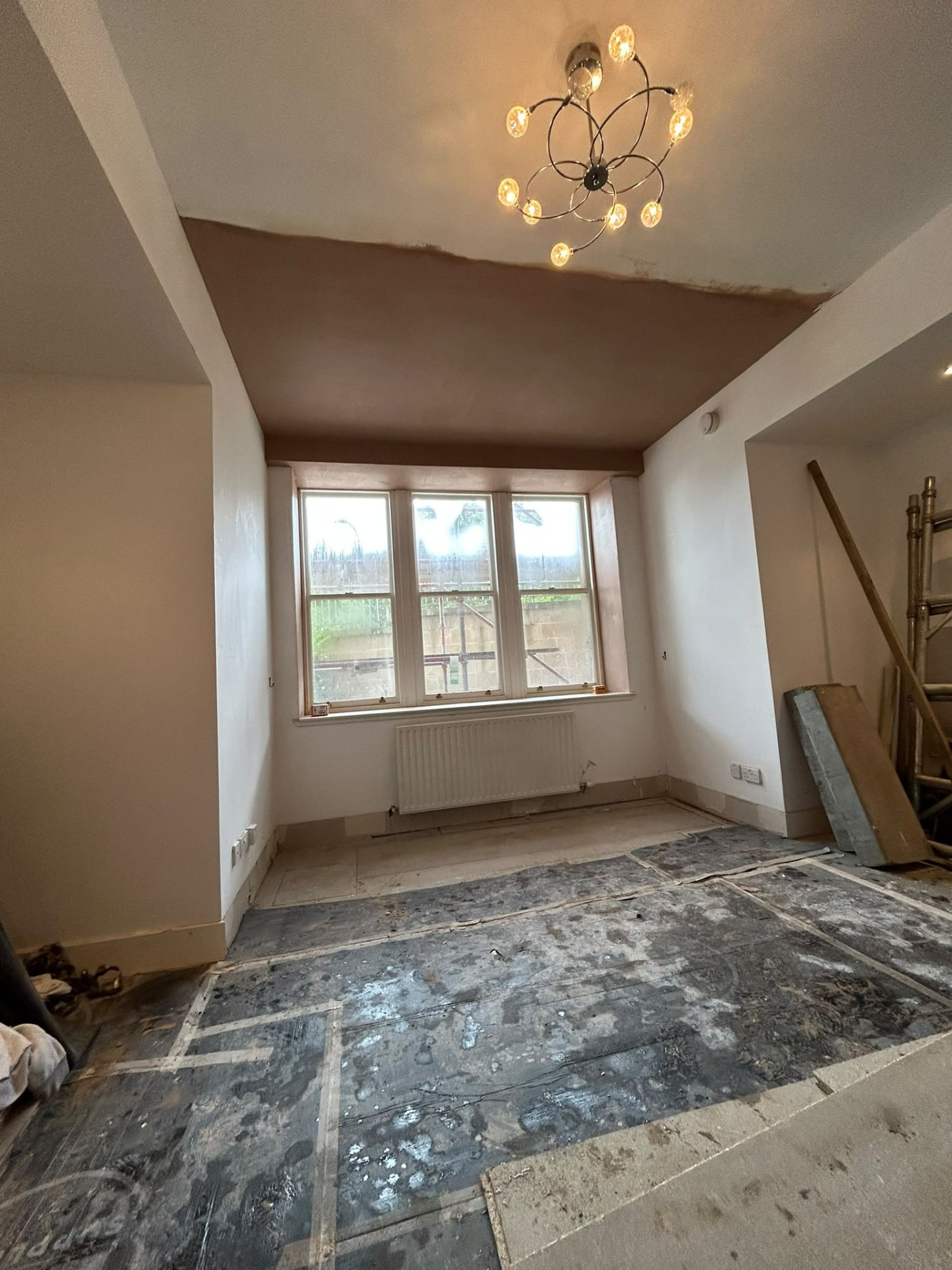
Artex Removal
Swirls, stipple and combed patterns gone for good; covered or removed, then skimmed to a flat surface that instantly takes ten years off the room.
See this service →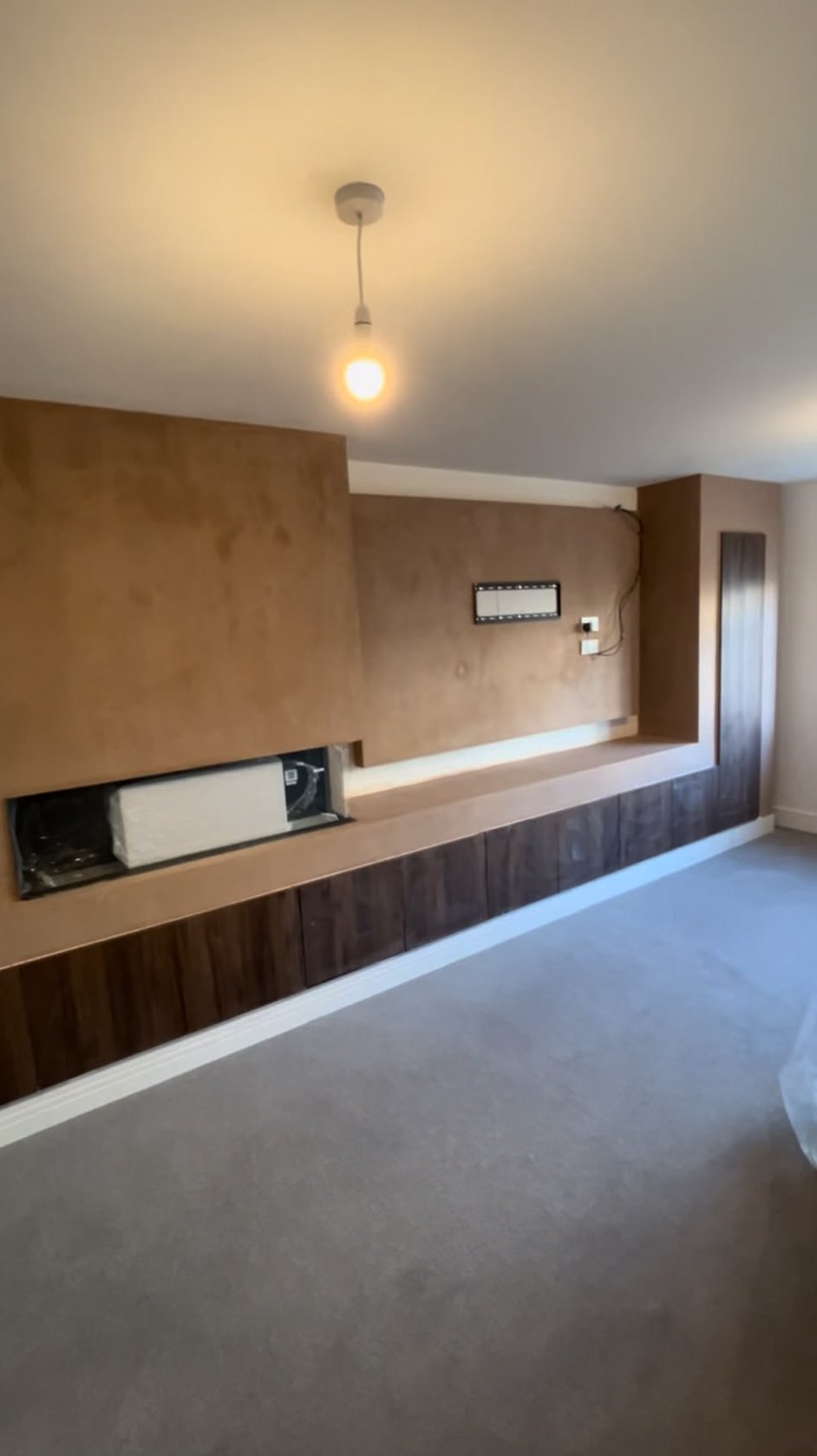
Dry Lining & Dot and Dab
Straight, warm, sound-deadened walls built over what you already have: the quickest way to turn a cold, uneven or unusable surface into a room-ready wall without wet-trade drying times.
See this service →
Skimming & Re-Skimming
A thin coat of finish plaster over what you already have: the fastest, least disruptive way to turn a patched, rippled or artexed surface into a wall that looks like it was built yesterday.
See this service →
Ceiling Repairs across the west of Scotland
Covering Glasgow, Paisley, Rutherglen, Bearsden, Clydebank, Bishopbriggs, Cambuslang, Renfrew, Newton Mearns and the surrounding towns. You can also see recent work, read the customer reviews, find out more about Ryan or head back to the homepage.
The Guarantee
What the 1–2 year workmanship guarantee actually covers
Every job carries £1 million public liability cover and a written 1–2 year workmanship guarantee. The terms are set out plainly below, so you know exactly where you stand before any work starts.
Covered
- Adhesion issues, where the plaster fails to bond as it should
- Blistering in the finished surface
- Debonding, commonly called blown plaster
- Plaster coming away from the wall
Not covered
- Structural movement in the building
- Cosmetic settlement cracking
- Shrinkage
- Damp or moisture caused by occupancy, such as a lack of ventilation or drying washing indoors
- Overboarding onto an existing unstable ceiling, which cannot be guaranteed because of the risk of movement behind the new boards
Next Step
Stop watching that ceiling- get it made sound
Free quote, usually the same day, with a straight answer on whether it needs a patch, an overboard or a replacement. £1 million public liability cover and a 1–2 year workmanship guarantee.
- 22 years on the trowel, 10 self-employed
- 5-star rated on MyBuilder across 124 reviews
- £1 million public liability cover
- 1–2 year workmanship guarantee on workmanship
Request Your Free Quote
Free, no-obligation quotes, usually turned around the same day.
No obligation. No pressure. Straight answer on price and timings.