
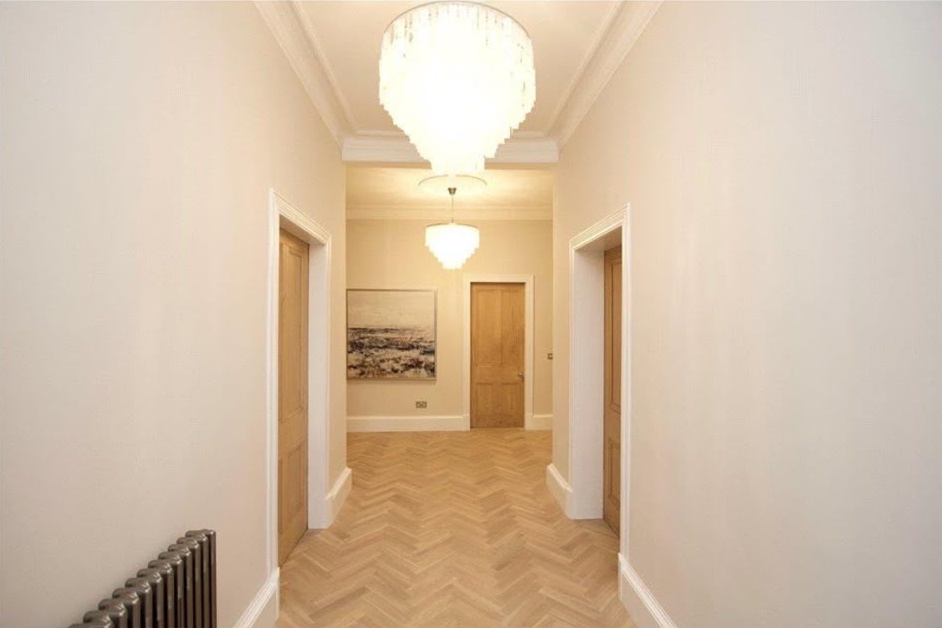
Cornicing in Glasgow
Cornicing in GlasgowPeriod detail repaired,matched and reinstated
The ornate run that makes a Glasgow tenement room what it is; repaired where it is broken, matched where it is missing, and cleaned back so the profile reads sharp again.
5-star rated on MyBuilder (124 reviews)Free quotes, usually same day
22 years
On the trowel, time-served
5★ · 124
Verified MyBuilder reviews
£1 million
Public liability cover
1–2 years
Workmanship guarantee
Same day
Free quote turnaround
Service Overview
What cornice work involves
Cornicing is the decorative moulded run at the head of a wall, typical of Victorian and Edwardian tenements and period houses across Glasgow. Unlike plain coving, a cornice carries a profile, steps, curves, enrichments, and that profile is what dates and defines the room.
Most cornice work is restoration rather than new installation. Sections get broken during rewires, refits and ceiling repairs; decades of paint clog the detail until it reads as a lumpy blur; damp and leaks soften and destroy runs, and previous owners sometimes removed cornice entirely to modernise a room, leaving a bare junction that looks wrong for the building.
The work covers repairing damaged sections, filling and re-forming missing detail, matching existing profiles so a new run reads continuous with the old, and reinstating cornice in rooms where it has been lost. In every case the aim is that a visitor cannot tell where the repair is.
This is careful, patient work and it is where an eye for fine detail counts. Ryan takes on period cornice repair alongside plastering and ceiling work, so a room needing both is handled in one go.
Who it is for
- Tenement and period property owners restoring original features
- Anyone whose cornice was damaged during a rewire, refit or ceiling repair
- Buyers restoring a flat that was stripped of its detail
- Landlords maintaining period properties to a standard that lets well
When it is needed
- Sections of cornice are cracked, broken or missing entirely
- The profile has been lost under layers of old paint
- Water damage has softened or destroyed a run
- New work has interrupted an existing cornice line
- A room has been stripped of cornice and looks bare for its era
The Cost Of Waiting
What is lost when cornice is neglected
Original cornice is one of the features people specifically buy Glasgow tenement flats for. When it is broken, missing or paint-clogged, the room loses the proportion it was designed with; high ceilings without a defined cornice line read as blank rather than grand, and the whole room feels less valuable than it is.
Damage also spreads. A cracked or detached section has lost its support along that line, and every vibration, ceiling movement and change in humidity works it further loose. Sections come away in pieces, and once a length of profile is gone, matching it becomes a bigger and more expensive piece of work than repairing it would have been.
The routine damage is water. A leak from above tracks along the ceiling and settles in the cornice, which is thicker and holds moisture longer than the surrounding plaster. It softens, sags and crumbles quietly, and by the time it shows on the surface, the run underneath has usually gone.
Common mistakes that make it worse
Painting over the detail again
Every extra coat rounds off the profile. Enough layers and the cornice becomes a soft blur with no shadow line at all, and stripping it back becomes a much longer job.
Filling broken profile with general filler
Detail has to be re-formed to the original shape. A smeared fillet across a broken section is obvious from anywhere in the room.
Fitting a modern cove to patch a period run
Profiles have to be matched. Butting a plain modern cove into an ornate Victorian run is a repair that draws the eye straight to it.
Repairing before the leak is dealt with
Cornice holds moisture longer than flat plaster, so any repair done under an unresolved leak fails again, usually within months.
Our Process
Five steps from first callto a guaranteed finish
- 01
Step 1 – Inspection
The existing run is examined for profile, damage extent, paint build-up, moisture and stability, and any missing sections are measured against surviving lengths.
- 02
Step 2 – Diagnosis and quote
A clear plan, repair, re-form, match or reinstate, with a fixed price for defined pieces of work or a day rate for larger restoration. Free quotes, usually returned the same day.
- 03
Step 3 – Preparation
Floors and fittings sheeted, loose and unsound material removed, damaged areas cut back to a solid edge, and surfaces prepared so new material bonds to old.
- 04
Step 4 – Repair and matching
Damaged sections rebuilt and profiles re-formed to follow the original, with new lengths matched into the existing run so the joins fall where they cannot be read.
- 05
Step 5 – Verification, clean-up and guarantee
The whole run is sighted along its length and checked under raking light, waste removed, room swept, and the workmanship carried by a 1–2 year guarantee.
What You Get
The difference it makes,stated plainly
Original character restored
A continuous, sharp cornice line puts back the feature that defines a period Glasgow room.
Repairs that cannot be spotted
Profiles matched and joins placed carefully, so the eye reads one unbroken run rather than a patch.
Damage stopped early
Securing a cracked or detached section prevents it becoming a missing length that has to be re-formed from scratch.
Protects what the property is worth
Intact period detail is a selling point in Glasgow tenements; a broken run is a visible deduction.
Done alongside other plaster work
Cornice repair, ceiling repair and re-skimming handled in the same visit rather than three separate trades.
Insured and guaranteed
£1 million public liability cover, with a 1–2 year workmanship guarantee on the work carried out.
In Detail
Profiles, methods and period detail
Glasgow's tenement cornices vary street by street. Some are simple stepped runs; others carry egg-and-dart, dentil blocks, floral enrichment or deep multi-part profiles built up from several elements. That variety is why cornice work cannot be ordered from a catalogue and stuck up; the profile in your room has to be read, understood and reproduced. The starting point is always a clean, undamaged length of the existing run, which acts as the reference for everything that gets repaired or replaced.
Repairs are built up in layers rather than filled in one pass. Broken areas are cut back to solid material and undercut so new material locks in, the backing is rebuilt to bring the mass roughly to shape, then the profile is worked and refined so it flows into the surviving run on both sides. The final judgement is made with light, not a straight edge: a cornice reads by its shadows, so if the shadow line runs unbroken past the repair, the repair is right.
Paint build-up is its own job. Decades of layers soften every arris on the profile, and simply repainting makes it worse. Careful cleaning back to recover the detail can transform a room without any structural repair at all. Where a room has lost its cornice entirely, reinstatement means selecting a profile appropriate to the building's period and proportions, so it reads as original rather than as a modern addition; the wrong choice is as noticeable as no cornice at all.
Materials used
Gypsum plaster and fibrous plaster sections
Used to rebuild damaged runs and to form replacement lengths that match the existing profile.
Bonding and finishing plasters
Bonding to rebuild mass in broken areas, finish plaster to work the profile and blend the repair into the surviving run.
Adhesives and mechanical fixings
Gypsum adhesive plus fixings where a run is heavy, long or fixed back to a less absorbent background.
Profile tools and templates
Used to reproduce the existing shape consistently across a repaired or newly matched length.
Variations of the work
Cornice repair
Cracked, chipped or partly missing sections rebuilt and re-formed to match the run either side.
Profile matching and replacement lengths
New lengths matched to the existing profile where a run has been lost or removed.
Cornice reinstatement
Period-appropriate cornice installed in rooms where the original was stripped out.
Cornice with ceiling work
Cornice repaired as part of ceiling repair or a full re-skim, so the junction and ceiling finish together.
Where this work typically applies
- Victorian and Edwardian tenement flats across the west and south side
- Period houses where rewiring or plumbing broke a run
- Rooms with leak damage tracking along the cornice line
- Flats stripped of original detail during 1970s–90s modernisation
- Properties being restored before sale, where detail affects value
- Rooms being re-skimmed where the cornice must be protected and finished
Domestic work is the priority: single rooms through to full house and flat refurbishments. Larger commercial contracts are not the focus, so your job is not queued behind a site.
Questions, Answered Straight
Cornicing in Glasgow- the things people ask
How much does cornice repair cost in Glasgow?
Defined pieces of work, a broken section, one room's run, are quoted at a fixed price for the job. Larger restoration across several rooms is usually a day rate, because matching and re-forming detail is time-based work. Photos of the existing profile plus room sizes are usually enough for a free quote the same day.
Can a missing section of cornice be matched?
In most cases, yes. A surviving length is used as the reference and the missing detail is rebuilt and worked to follow it. The aim is that you cannot identify where the repair starts and stops once it is painted.
How long does cornice work take?
A localised repair is often a day, with a return visit if the build-up needs to set between stages. Whole-room restoration or reinstatement takes longer, and the realistic timescale is given at quote stage.
My cornice is clogged with paint; can that be fixed?
Often, yes. Careful cleaning back can recover a profile that has been lost under decades of layers, and it can transform how a room reads without any structural repair at all. It will be assessed honestly, because some build-ups are further gone than others.
Can cornice be put back in a room that had it removed?
Yes. The key is choosing a profile appropriate to the building's period and ceiling height so the run reads as original rather than as a modern addition dropped into an old room.
What causes cornice to crack or come away?
Usually one of three things: movement in the ceiling or structure, water damage from above, or physical damage during other work such as rewiring. The repair route depends on which one it is, so the cause gets identified before anything is quoted.
Is cornice work guaranteed?
The workmanship carries a 1 to 2 year guarantee covering adhesion and debonding. Structural movement, settlement cracking and damp caused by ventilation issues sit outside that cover.
Can you do cornice and ceiling repairs together?
Yes, and it is usually more efficient. Ceiling repairs, re-skimming and cornice work in the same room are sequenced in one visit rather than being split across separate jobs.
How much mess does it make?
Floors and fittings are sheeted before work starts, debris is bagged as it is produced, and the room is swept out at the end of each day. Tidiness comes up repeatedly across the 124 five-star MyBuilder reviews.
Which areas do you cover for cornicing?
Glasgow and the surrounding towns, including Paisley, Rutherglen, Bearsden, Clydebank, Bishopbriggs, Cambuslang, Renfrew and Newton Mearns.
Related Work
Often done at the same time
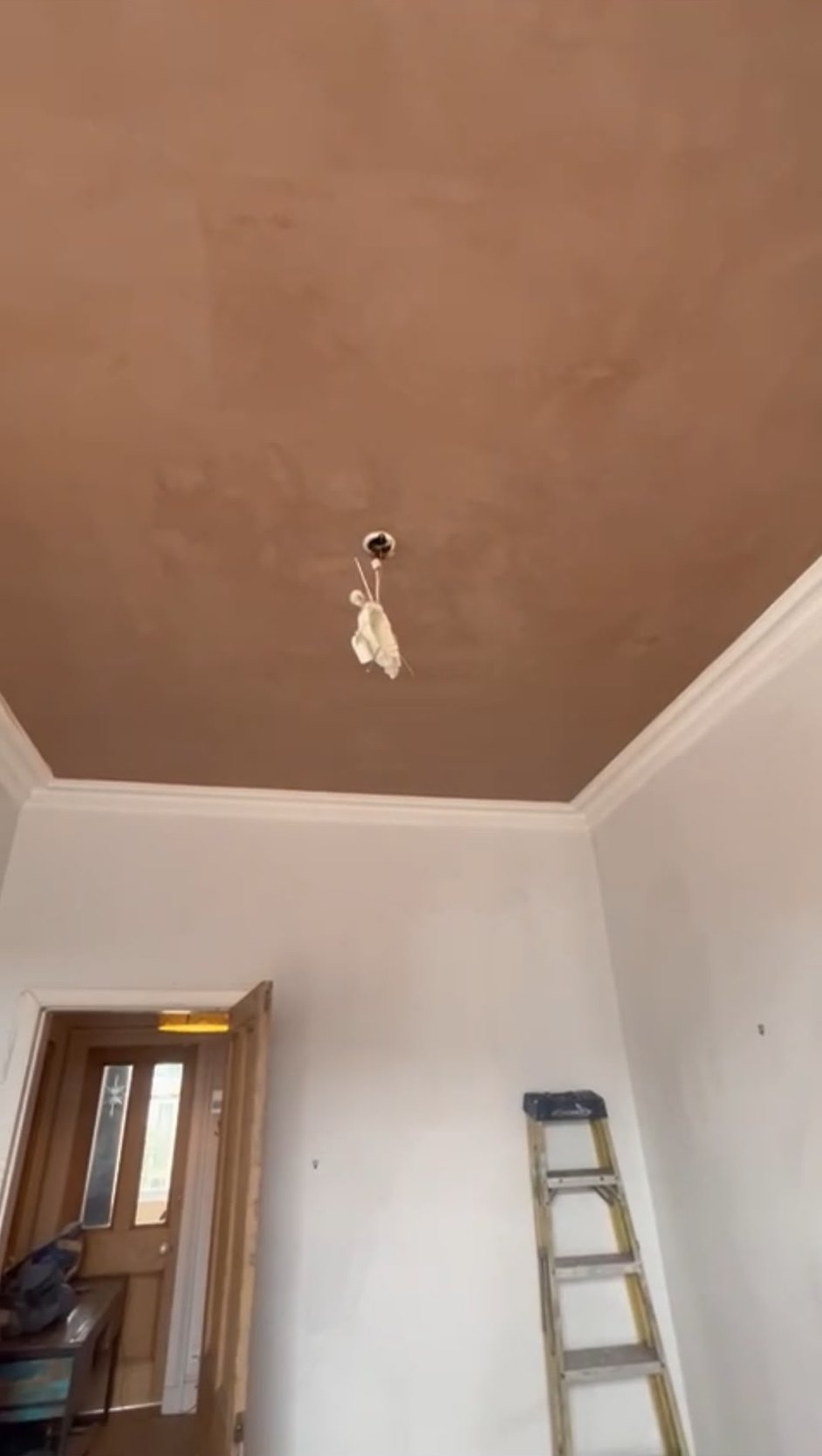
Coving Installation
The finishing detail that makes a room look designed rather than decorated; fitted level, mitred tight and filled so cleanly that the only thing you notice is the shadow line.
See this service →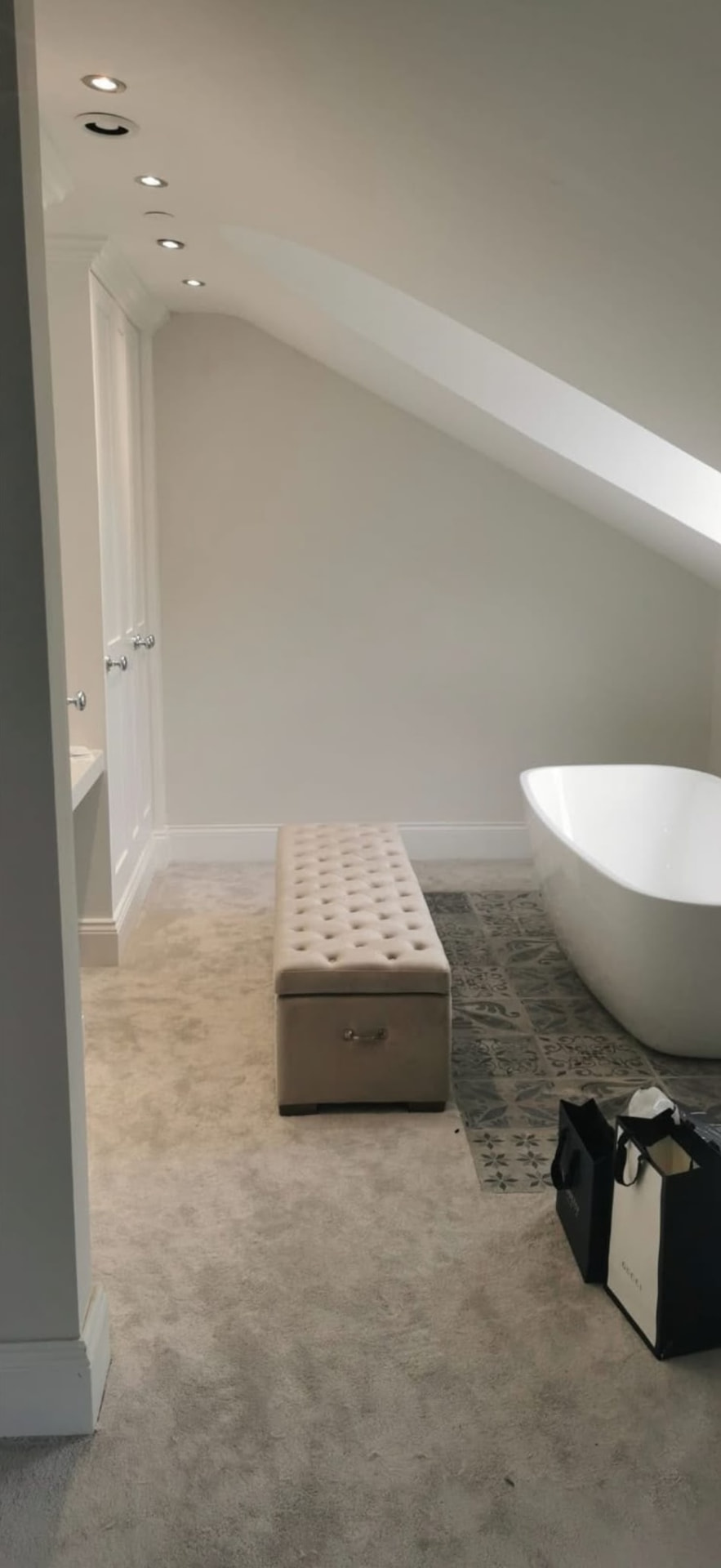
Ceiling Repairs
A ceiling that is coming away is not a decorating job. It gets stabilised, repaired and skimmed back to a single seamless surface, so you stop watching it and start forgetting about it.
See this service →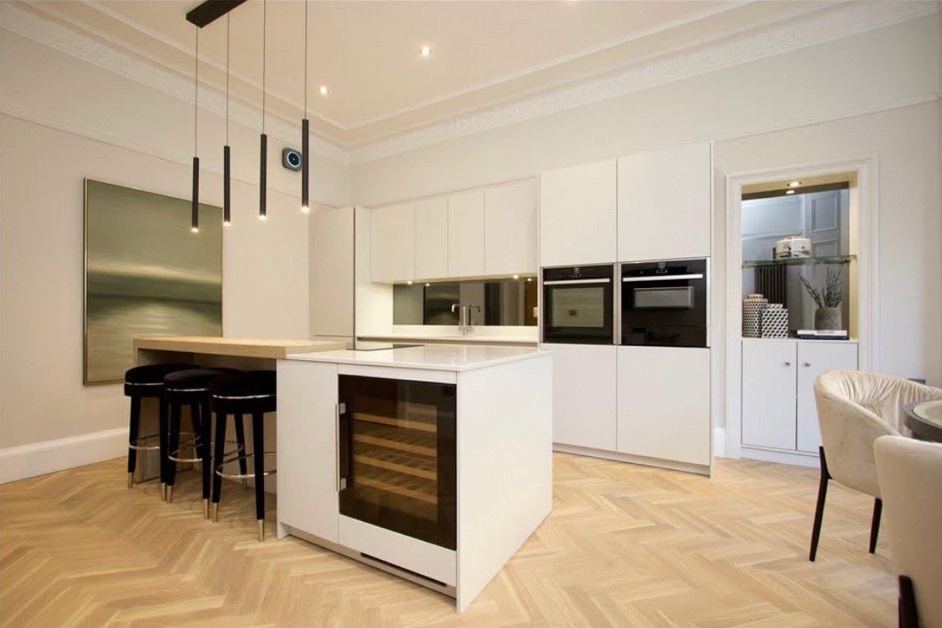
Plastering
Rooms handed back straight, smooth and ready for paint, without weeks of disruption, without dust through the whole house, and without chasing a tradesman who stopped answering.
See this service →
Cornicing across the west of Scotland
Covering Glasgow, Paisley, Rutherglen, Bearsden, Clydebank, Bishopbriggs, Cambuslang, Renfrew, Newton Mearns and the surrounding towns. You can also see recent work, read the customer reviews, find out more about Ryan or head back to the homepage.
The Guarantee
What the 1–2 year workmanship guarantee actually covers
Every job carries £1 million public liability cover and a written 1–2 year workmanship guarantee. The terms are set out plainly below, so you know exactly where you stand before any work starts.
Covered
- Adhesion issues, where the plaster fails to bond as it should
- Blistering in the finished surface
- Debonding, commonly called blown plaster
- Plaster coming away from the wall
Not covered
- Structural movement in the building
- Cosmetic settlement cracking
- Shrinkage
- Damp or moisture caused by occupancy, such as a lack of ventilation or drying washing indoors
- Overboarding onto an existing unstable ceiling, which cannot be guaranteed because of the risk of movement behind the new boards
Next Step
Put the detail backin your period room
Send a photo of the run and get a free quote, usually the same day. £1 million public liability cover and a 1–2 year workmanship guarantee on every job.
- 22 years on the trowel, 10 self-employed
- 5-star rated on MyBuilder across 124 reviews
- £1 million public liability cover
- 1–2 year workmanship guarantee on workmanship
Request Your Free Quote
Free, no-obligation quotes, usually turned around the same day.
No obligation. No pressure. Straight answer on price and timings.