
Artex Removal in Glasgow
Artex removal in GlasgowDated textured ceilingsmade flat and smooth
Swirls, stipple and combed patterns gone for good; covered or removed, then skimmed to a flat surface that instantly takes ten years off the room.
5-star rated on MyBuilder (124 reviews)Free quotes, usually same day
22 years
On the trowel, time-served
5★ · 124
Verified MyBuilder reviews
£1 million
Public liability cover
1–2 years
Workmanship guarantee
Same day
Free quote turnaround
Service Overview
Two routes to a flat ceiling
Artex is the textured coating applied to ceilings and some walls from the 1960s through to the 1990s. It was popular because it hid imperfections; it is unpopular now because it collects dust, casts shadows under modern lighting and dates a room instantly, no matter what colour it is painted.
There are two ways to get rid of it visually. The first is covering: the texture is treated and knocked back where necessary, then the ceiling is skimmed in finish plaster so the surface comes out flat. The second is removal, taking the coating off before re-skimming: more disruptive, and only necessary in specific cases.
For most ceilings, covering and skimming is the better route: it is faster, far less messy, and the result is identical once it is painted. Where the texture is very deep, unstable, or the ceiling underneath is not sound, the honest answer is different, sometimes overboarding, sometimes replacement.
One important point: coatings applied before the year 2000 may contain asbestos. Where that is a possibility, the safe route is covering rather than sanding or scraping, or testing before anything disturbs it. Ryan will raise this with you rather than take a chance with it.
Who it is for
- Homeowners in 1960s–90s properties with textured ceilings throughout
- Buyers modernising a dated flat or house room by room
- Anyone fitting downlighters, which make texture look far worse
- Landlords updating a property to let at a better standard
When it is needed
- The ceiling texture looks tired, yellowed or grubby
- New lighting is throwing hard shadows across the pattern
- You are redecorating and do not want to paint the texture again
- Cracks or stains are showing through the textured coating
The Cost Of Waiting
What textured ceilings cost you
Artex is a dust trap. Every peak and ridge holds airborne dust, cooking residue and nicotine, which is why old textured ceilings go yellow unevenly and never come clean. You cannot wipe them, so the only maintenance option is painting, and each coat softens the pattern into something even lumpier.
It also makes every other improvement look half-finished. New flooring, a new kitchen, fresh paint and modern lighting all sit under a ceiling that is visibly from another decade. Downlighters make it worse, because raking light across a textured surface exaggerates every ridge.
The real risk is disturbing it wrongly. Textured coatings from before 2000 can contain asbestos, and sanding or dry-scraping them is precisely the wrong approach, it is the disturbance, not the presence, that creates the hazard. That is why covering and skimming is so often the sensible route, and why a plasterer who shrugs at the question is a plasterer to avoid.
Common mistakes that make it worse
Sanding artex to flatten it
The worst possible approach, it creates airborne dust, and where the coating pre-dates 2000 that dust may contain asbestos fibres.
Painting over it again
Each coat rounds and thickens the texture. Ten coats later, the pattern is deeper and softer, and skimming it takes more work.
Skimming over deep or loose texture
A thick skim over unstable or heavy texture is prone to cracking. High spots are knocked back or bonded first so the skim thickness stays even.
Overboarding a ceiling that is already unstable
Adding board weight to a failing ceiling makes the failure worse, and overboarding onto unstable ceilings cannot be guaranteed.
Our Process
Five steps from first callto a guaranteed finish
- 01
Step 1 – Inspection
Texture depth, coating stability and ceiling condition are checked, along with the property age, because pre-2000 coatings change the safe approach.
- 02
Step 2 – Diagnosis and quote
You get a recommendation of cover-and-skim, removal, or overboarding, with the reasoning explained, plus a fixed price for smaller jobs or a day rate for whole properties. Free, usually same day.
- 03
Step 3 – Protection and preparation
Floors, furniture and fittings fully sheeted, light fittings dealt with, then the surface treated; high spots knocked back or a bonding coat applied so the skim has a stable, even base.
- 04
Step 4 – Skim to flat
Two coats of finish plaster applied and troweled up through the set so the ceiling comes out flat under a light, with sharp perimeters at the wall junction.
- 05
Step 5 – Verification, clean-up and guarantee
The ceiling is checked under raking light for shadowing, waste bagged and removed, the room swept, and the plastering covered by a 1–2 year workmanship guarantee.
What You Get
The difference it makes,stated plainly
The single biggest visual upgrade in an old room
A flat ceiling modernises a room more than paint, flooring or furniture will.
No more dust-trapping ridges
A smooth, dense plaster surface stays cleaner and can actually be painted back to white.
Downlighters look right
Flat ceilings stop modern lighting raking shadows across a textured pattern.
Lower disturbance route where appropriate
Covering rather than scraping avoids disturbing older coatings unnecessarily.
Usually a one to two day job
Most single ceilings are done and off your list inside two days, with drying time after.
Insured and guaranteed
£1 million public liability cover and a 1–2 year workmanship guarantee on the plastering.
In Detail
Texture types, asbestos considerations and finish quality
Not all artex is the same, and the pattern determines the method. Light stipple and fine orange-peel textures take a skim directly after bonding treatment and produce an excellent flat finish. Swirl, comb and stipple-with-peaks patterns need the high points knocked back so the plaster thickness stays consistent across the ceiling; plaster that is thin in one place and thick in another dries at different rates and is more prone to cracking. Very deep, heavily peaked textures are usually better dealt with by overboarding, which gives a fresh, flat, predictable base.
Asbestos deserves a plain explanation. Textured coatings manufactured before around 2000 may contain small percentages of chrysotile asbestos. Intact and undisturbed, they are not considered a risk; the hazard comes from creating dust by sanding, dry scraping or breaking the coating up. That is exactly why covering and skimming, a wet process that seals the surface rather than abrading it, is so often the recommended route in older properties. If removal is genuinely necessary in a pre-2000 property, testing first is the right sequence, not an optional extra.
Finish quality on ceilings is unforgiving. A ceiling is lit from below and across, so any hollow, ripple or trowel line shows in a way it never would on a wall. The perimeter matters too: where the ceiling meets the wall, the line has to be cut in cleanly, and where coving is being fitted afterwards the sequencing needs planning so the junction finishes properly. Ceilings are also where drying advice matters most; plaster overhead dries slower, and painting too early is the most common cause of a beautiful new ceiling peeling in patches.
Materials used
Bonding primers for textured surfaces
High-grip primers that stabilise and key an existing texture so a skim coat bonds reliably.
Multi-finish plaster
The finish coat applied in two passes and troweled up to bring the ceiling flat and dense.
Plasterboard for overboarding
Used where texture is too deep or the existing ceiling is not a suitable base for skimming.
Scrim tape, beads and fixings
Joint reinforcement and clean perimeter detailing on overboarded and repaired ceilings.
Variations of the work
Cover and skim
The most common route: texture treated and skimmed flat with no scraping or sanding involved.
Overboard and skim
New plasterboard fixed over the textured ceiling, then skimmed. Suitable only where the ceiling is stable.
Full removal and re-skim
Coating removed before re-skimming, used where covering is not viable. Pre-2000 coatings should be tested first.
Textured walls
Artex is not only a ceiling problem; textured walls are covered and skimmed using the same approach.
Where this work typically applies
- 1960s–90s houses and flats with textured ceilings throughout
- Rooms being fitted with downlighters or new lighting
- Kitchens and bathrooms where texture has discoloured
- Whole-property modernisations after purchase
- Rental turnarounds that need a visible standard uplift
- Hallways and stairwells where texture runs across the whole ceiling plane
Domestic work is the priority: single rooms through to full house and flat refurbishments. Larger commercial contracts are not the focus, so your job is not queued behind a site.
Questions, Answered Straight
Artex Removal in Glasgow- the things people ask
How much does artex removal cost in Glasgow?
Single ceilings are quoted at a fixed price for the job, so the number cannot move once work starts. Whole properties are usually priced on a day rate. Room sizes and a photo of the texture are usually enough for a free quote back the same day.
Is it better to remove artex or skim over it?
For most ceilings, covering and skimming gives an identical finished result with far less mess, less time and less disturbance. Removal is reserved for cases where covering is not viable. You will get the reasoning for whichever route is recommended.
Does artex contain asbestos?
Textured coatings applied before around 2000 may contain a small percentage of asbestos. Left intact it is not considered a risk; the hazard comes from sanding or scraping and creating dust. That is a key reason covering and skimming is so often the sensible route, and it will be discussed with you rather than ignored.
How long does it take to skim an artexed ceiling?
A typical single ceiling is generally a one to two day job including preparation. Whole properties are sequenced room by room. Drying time before decorating comes after that.
How long before I can paint the new ceiling?
Ceilings dry more slowly than walls, so allow anywhere from a few days to a couple of weeks depending on the season and ventilation. Wait for uniform colour across the whole plane and then use a thinned mist coat first.
Will my house be covered in dust?
Skimming is a wet trade, so it creates far less airborne dust than sanding. Floors, furniture and fittings are fully sheeted, waste is bagged, and the room is swept at the end of each day.
Can you skim textured walls as well as ceilings?
Yes. Textured wall coatings are treated and skimmed using the same approach, and it is often done at the same time as the ceiling so the whole room is finished in one visit.
Is the work guaranteed?
Yes: a 1 to 2 year workmanship guarantee covering adhesion, blistering and debonding. Overboarding onto an existing unstable ceiling is the one exception, and it is flagged before work rather than after.
Can it be done room by room while we live here?
Yes, and that is how most of these jobs run. Work is contained to one room at a time, sheeted and swept daily, so the rest of the house stays usable.
Which areas do you cover?
Glasgow and the surrounding towns including Paisley, Rutherglen, Bearsden, Clydebank, Bishopbriggs, Cambuslang, Renfrew and Newton Mearns.
Related Work
Often done at the same time
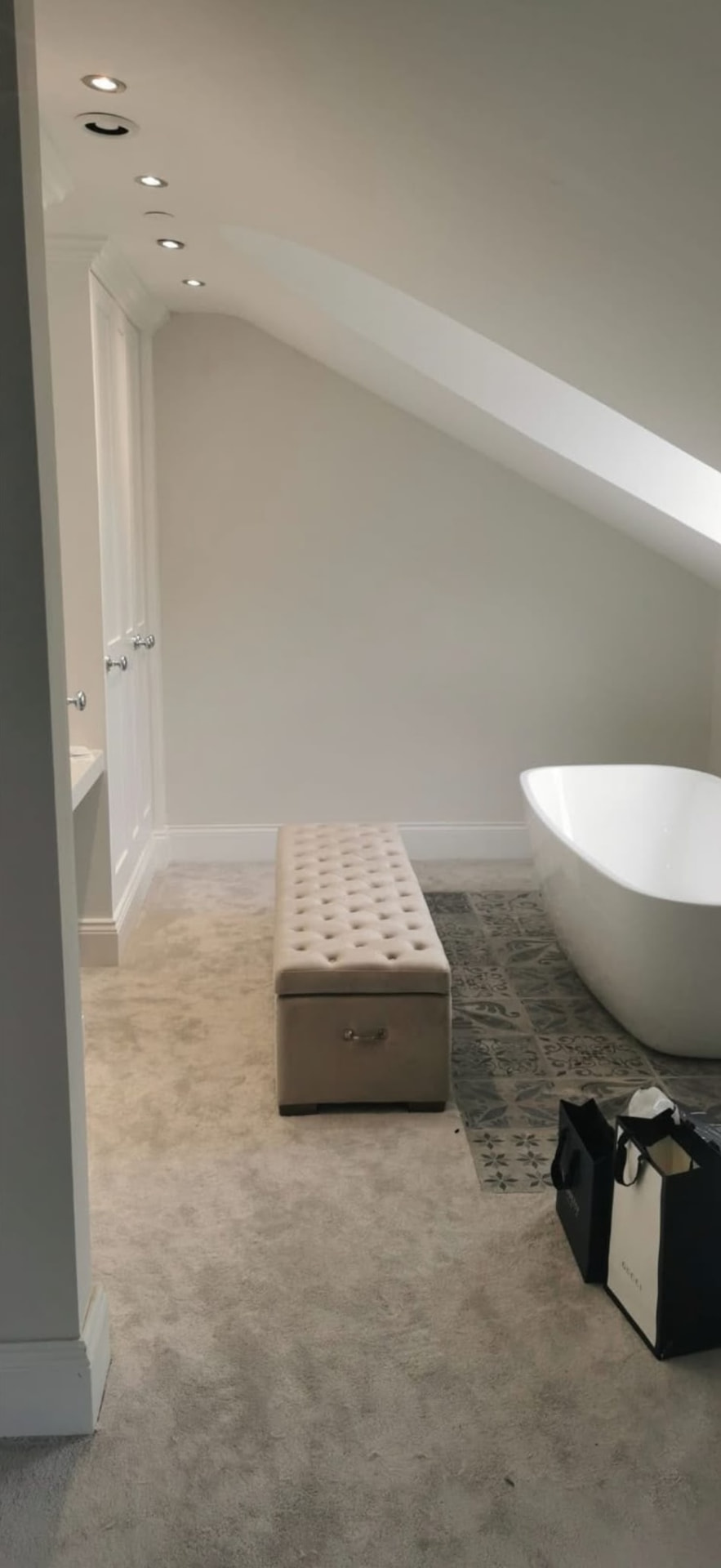
Ceiling Repairs
A ceiling that is coming away is not a decorating job. It gets stabilised, repaired and skimmed back to a single seamless surface, so you stop watching it and start forgetting about it.
See this service →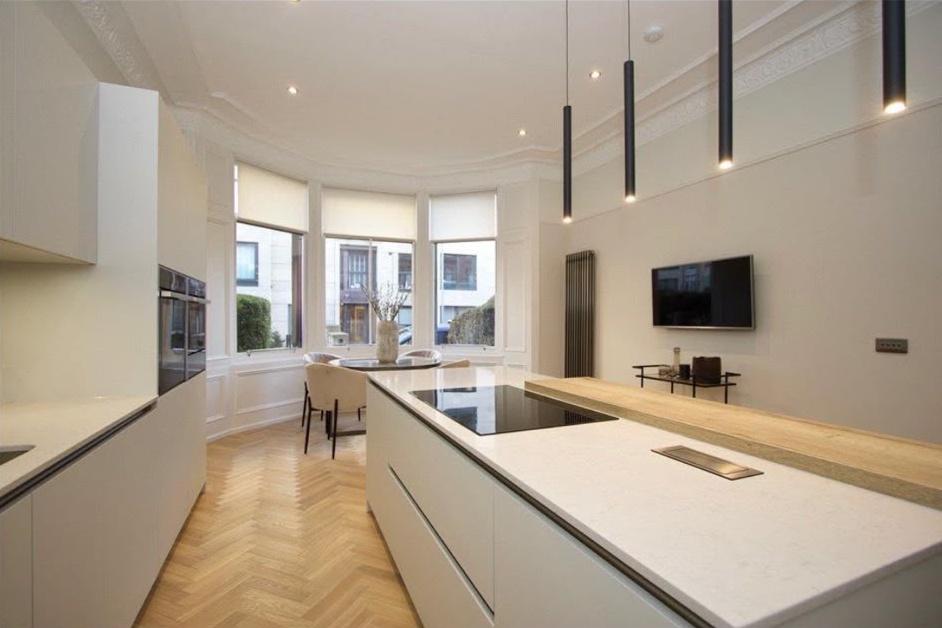
Skimming & Re-Skimming
A thin coat of finish plaster over what you already have: the fastest, least disruptive way to turn a patched, rippled or artexed surface into a wall that looks like it was built yesterday.
See this service →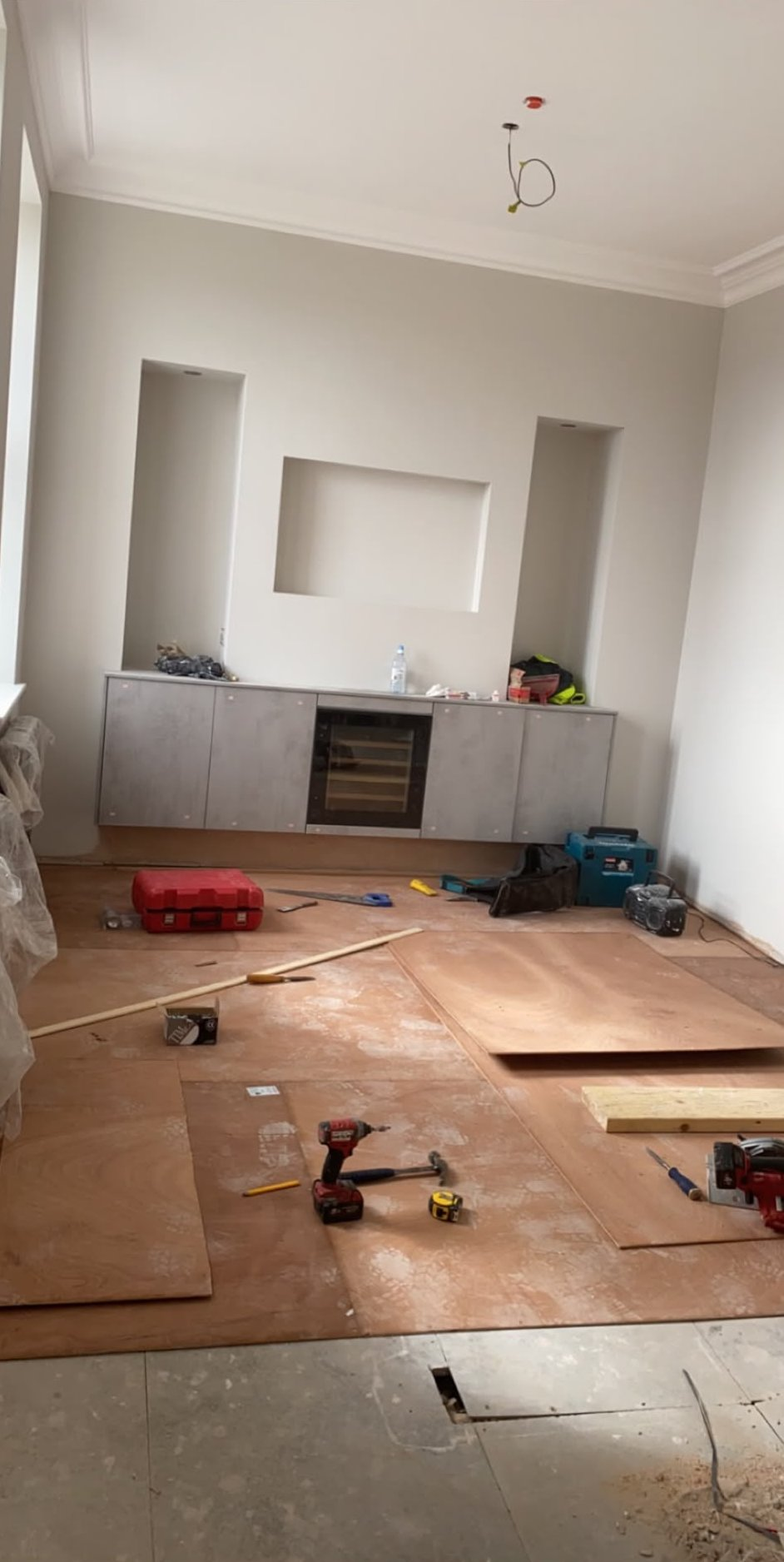
Overboarding
A cleaner, quicker route to a flat ceiling than pulling the old one down, where the existing surface is sound enough to take it.
See this service →
Artex Removal across the west of Scotland
Covering Glasgow, Paisley, Rutherglen, Bearsden, Clydebank, Bishopbriggs, Cambuslang, Renfrew, Newton Mearns and the surrounding towns. You can also see recent work, read the customer reviews, find out more about Ryan or head back to the homepage.
The Guarantee
What the 1–2 year workmanship guarantee actually covers
Every job carries £1 million public liability cover and a written 1–2 year workmanship guarantee. The terms are set out plainly below, so you know exactly where you stand before any work starts.
Covered
- Adhesion issues, where the plaster fails to bond as it should
- Blistering in the finished surface
- Debonding, commonly called blown plaster
- Plaster coming away from the wall
Not covered
- Structural movement in the building
- Cosmetic settlement cracking
- Shrinkage
- Damp or moisture caused by occupancy, such as a lack of ventilation or drying washing indoors
- Overboarding onto an existing unstable ceiling, which cannot be guaranteed because of the risk of movement behind the new boards
Next Step
Lose the swirls,get a flat ceiling
Send a photo of the ceiling for a free quote, usually the same day. Fixed pricing on single ceilings, £1 million public liability cover, and a 1–2 year workmanship guarantee.
- 22 years on the trowel, 10 self-employed
- 5-star rated on MyBuilder across 124 reviews
- £1 million public liability cover
- 1–2 year workmanship guarantee on workmanship
Request Your Free Quote
Free, no-obligation quotes, usually turned around the same day.
No obligation. No pressure. Straight answer on price and timings.