
Overboarding in Glasgow
Overboarding in GlasgowTired ceilings coveredand skimmed flat
A cleaner, quicker route to a flat ceiling than pulling the old one down, where the existing surface is sound enough to take it.
5-star rated on MyBuilder (124 reviews)Free quotes, usually same day
22 years
On the trowel, time-served
5★ · 124
Verified MyBuilder reviews
£1 million
Public liability cover
1–2 years
Workmanship guarantee
Same day
Free quote turnaround
Service Overview
What overboarding involves
Overboarding means fixing new plasterboard directly over an existing ceiling or wall, screwing through into the joists or studs behind, then skimming the new surface flat and ready to decorate. It is the standard answer to a ceiling that is cracked, textured, patched or simply past saving on the surface, but still structurally fine behind.
The appeal is mostly practical. Taking an old lath and plaster ceiling down is a genuinely filthy job: a hundred years of soot and dust comes with it, the room has to be cleared, and the waste fills a skip. Overboarding avoids nearly all of that. The room is sheeted, the boards go up, the joints are taped and the whole surface is skimmed.
It is not the right answer everywhere, and you will be told so. Where the existing ceiling is hollow over a wide area, sagging, or has lost its key to the laths, the honest recommendation is to take it down rather than hang more weight on it.
Ryan carries out the work personally, on domestic properties across Glasgow and the surrounding towns. The person who prices the job is the person who does it.
Who it is for
- Homeowners with an artexed or heavily cracked ceiling that is still sound
- Anyone who wants a flat ceiling without the mess of a full strip out
- Landlords preparing a flat between tenancies on a tight timescale
- People with old lath and plaster ceilings that are tired but not moving
When it is needed
- The ceiling is textured or artexed and you want it flat
- There is widespread fine cracking but no sagging
- Old plaster has been patched so many times it will not take paint evenly
- You want to avoid clearing the whole room for a strip out
- New downlights or insulation are going in at the same time
The Cost Of Waiting
Where overboarding goes wrong
The failures almost always come from boarding over something that should have come down. New plasterboard adds weight, and if the existing ceiling has already lost its grip on the laths, that weight goes onto a structure that was struggling. It can look perfect for months and then move.
The other common fault is fixing. Boards screwed into old plaster rather than into joists have nothing holding them. Joists have to be found and marked properly, and the fixings have to be long enough to reach through the existing ceiling and bite into timber.
Then there is the finish. A skim over untreated board joints will crack along every seam, and boards butted tight without a staggered pattern give you long continuous joints that telegraph straight through paint.
Common mistakes that make it worse
Boarding over a ceiling that is already moving
If it is hollow, sagging or bouncing, more weight is the wrong answer. That situation needs taking down, not covering.
Fixing into plaster instead of joists
Screws must reach timber. Anything else is a ceiling held up by old plaster that has already proved it cannot be trusted.
Skipping scrim tape on the joints
Untaped joints crack. Every joint gets scrimmed and filled before the finish coat.
Forgetting what sits above
Downlights, loft hatches, cables and pipework all need planning before the boards go up, not cutting out afterwards.
Our Process
Five steps from first callto a guaranteed finish
- 01
Step 1 – Assessment
Ryan checks whether the existing ceiling is genuinely sound: tapping for hollows, looking for sag and movement, and checking joist direction and spacing. If overboarding is the wrong call, you are told that before anything is priced.
- 02
Step 2 – Quote
A fixed price on smaller jobs, or a day rate on larger projects where scope varies. Free, no obligation and usually turned around the same day.
- 03
Step 3 – Protection and setting out
Floors and remaining furniture are sheeted, joists are located and marked, and fittings such as light roses and vents are taken down safely.
- 04
Step 4 – Boarding
Plasterboard is fixed through into the joists with staggered joints and correctly spaced screws, cut tight around edges, and set out so the boards run across the joists rather than with them.
- 05
Step 5 – Skimming and clean-up
Joints are scrimmed, the full surface is skimmed in coats and troweled flat, then the room is cleared, swept and left ready to decorate once the plaster has dried.
What You Get
The difference it makes,stated plainly
Far less mess than a strip out
No skip full of soot and lath, no clearing the entire room, and usually no need to move out of the house.
A quicker turnaround
Most single rooms are boarded and skimmed inside a couple of days rather than a week.
A genuinely flat ceiling
New board gives a true plane to skim onto, so the finished surface reads clean under low light.
A chance to upgrade
Insulation, new lighting and cabling can be dealt with while the ceiling is open to work on.
An honest recommendation
If your ceiling should come down instead, you will be told, even though it is the harder sell.
Covered work
£1 million public liability cover, and a 1–2 year workmanship guarantee on the plastering.
In Detail
The detail behind overboarding properly
Board thickness and orientation matter more than most people expect. Ceilings are normally boarded in 12.5mm plasterboard fixed across the joists, with the long edges landing on timber and end joints staggered from row to row. Running boards the same way as the joists, or lining every joint up, creates long weak lines that show as hairline cracks a year later.
Fixings are set at regular centres and driven just below the paper face without breaking it. A screw that tears the paper has lost most of its holding power; a screw left proud stops the skim sitting flat. Where the existing ceiling is thick lath and plaster, longer screws are used so there is a proper bite into the joist behind rather than a fixing that is mostly passing through old material.
Before skimming, every joint is scrimmed with self-adhesive tape and the internal angles are treated so movement between board and wall does not open a line at the perimeter. The skim then goes on in two coats and is troweled up as it firms, so the finish comes off flat rather than being sanded into shape.
One limitation is stated openly rather than buried: overboarding onto an existing ceiling that is unstable cannot be guaranteed, because the risk lies in the structure behind the new boards rather than in the new work itself.
Materials used
12.5mm plasterboard
The standard board for ceilings and walls in a domestic overboard, cut to land on joists or studs.
Moisture resistant board
Used in bathrooms, kitchens and other rooms where humidity is a regular feature.
Drywall screws
Length chosen so the fixing passes through the existing ceiling and bites properly into timber behind.
Scrim tape and jointing compound
Applied to every joint and internal angle before skimming to stop cracking along the seams.
Variations of the work
Ceiling overboarding
The most common request: artex, cracked or tired ceilings covered and skimmed flat.
Wall overboarding
Used where a solid wall is badly out of true or the existing plaster is failing across a large area.
Overboard with insulation
Insulated board or a service void added where heat loss or sound transfer is an issue.
Partial overboarding
One ceiling in a run of rooms, boarded and blended into sound existing plaster at the junctions.
Where this work typically applies
- Artexed ceilings in 1970s and 1980s Glasgow semis
- Tenement lath and plaster ceilings that are tired but not sagging
- Ceilings marked by an old leak that has since been fixed
- Rooms being refitted where new downlights are going in
- Flats being brought back into a lettable condition quickly
Domestic work is the priority: single rooms through to full house and flat refurbishments. Larger commercial contracts are not the focus, so your job is not queued behind a site.
Questions, Answered Straight
Overboarding in Glasgow- the things people ask
Is overboarding as good as a new ceiling?
Where the existing ceiling is sound, yes: you end up with new board and a fresh skim, which is the same finished surface you would get from a replacement. The difference is that the old ceiling stays in place above it.
How do I know if my ceiling can be overboarded?
It comes down to whether the existing ceiling is stable. Ryan taps it through, checks for sag and movement, and gives you a straight answer. If it should come down, that is what you will be told.
Will it lower my ceiling height?
By the thickness of the board and skim, so around 15mm. In practice that is not noticeable in a normal room.
Can you overboard an artex ceiling?
Yes, and it is usually the tidiest way to deal with artex. The texture is covered rather than scraped off, which avoids the mess and the disturbance of the original coating.
Is the work guaranteed?
The workmanship carries a 1–2 year guarantee covering adhesion, blistering and debonding. The one stated exception is overboarding onto an existing unstable ceiling, which cannot be guaranteed because of the risk of movement in the structure behind.
How long does a room take?
A typical single room ceiling is boarded and skimmed over about two days, plus drying time before you decorate.
How messy is it?
Much less than a strip out. Floors and fittings are sheeted, waste is bagged as it is produced and the room is swept out at the end of each day.
Which areas do you cover?
Glasgow and the surrounding towns including Paisley, Rutherglen, Bearsden, Clydebank, Bishopbriggs, Cambuslang, Renfrew and Newton Mearns.
Related Work
Often done at the same time
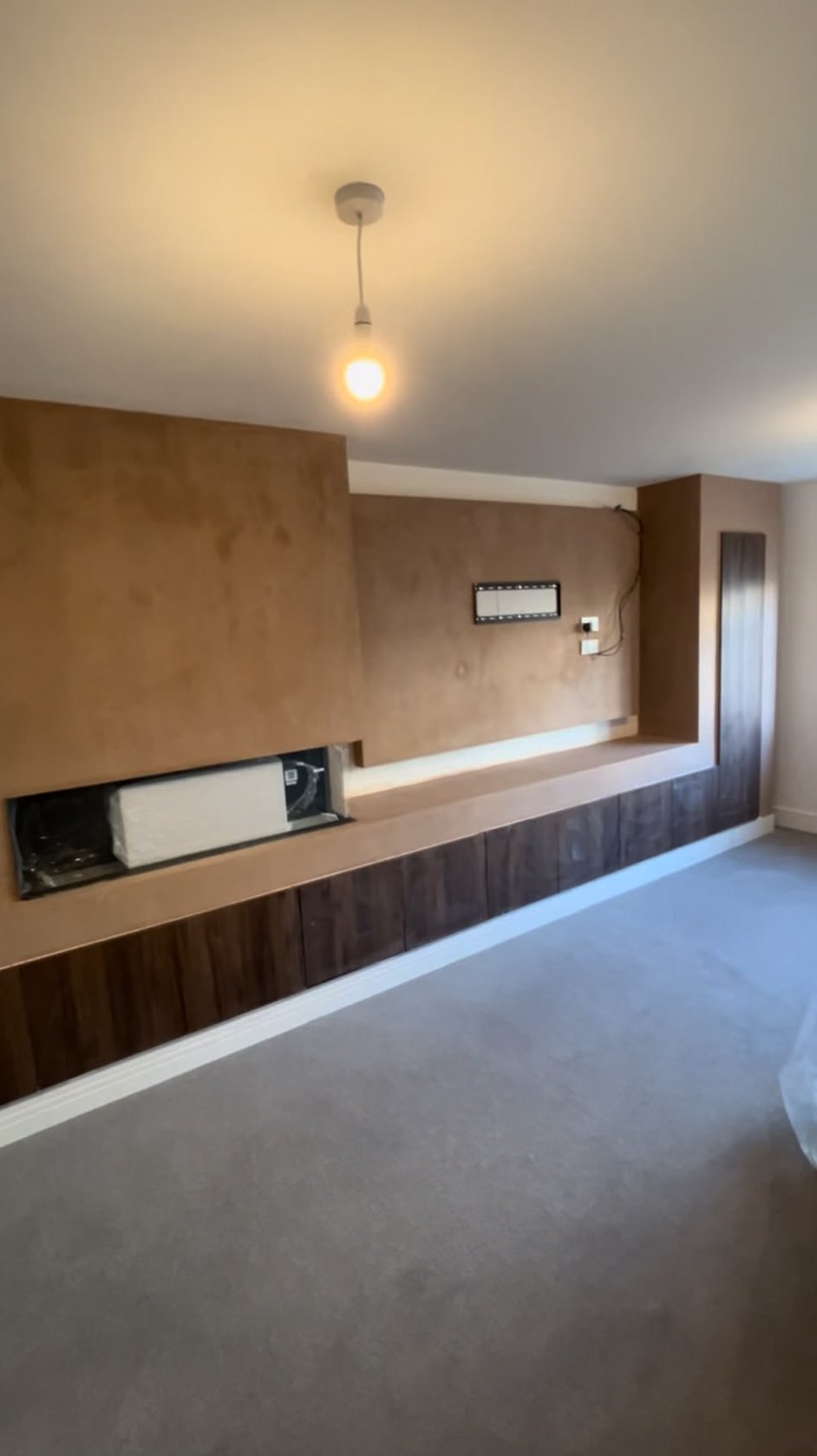
Dry Lining & Dot and Dab
Straight, warm, sound-deadened walls built over what you already have: the quickest way to turn a cold, uneven or unusable surface into a room-ready wall without wet-trade drying times.
See this service →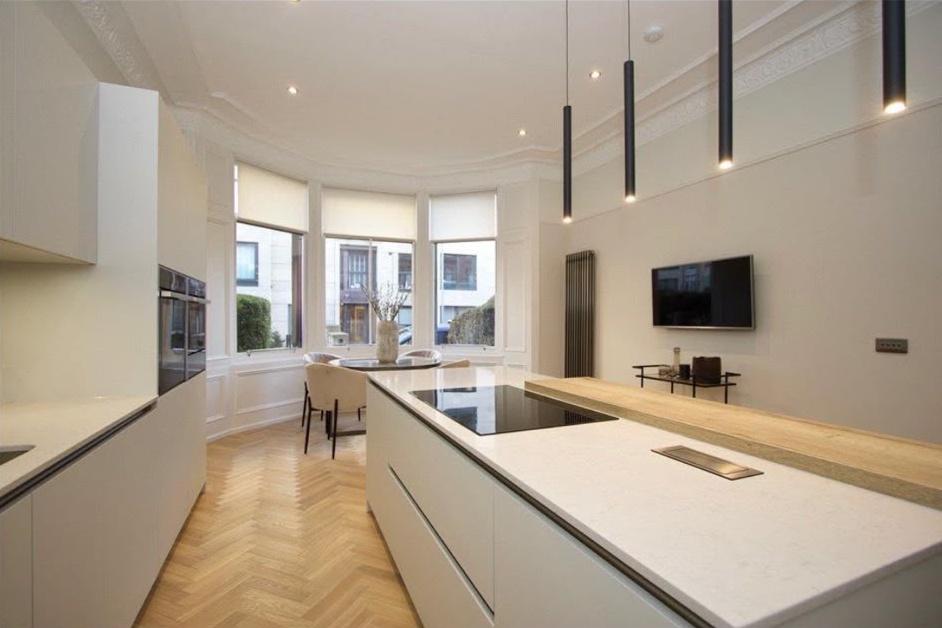
Skimming & Re-Skimming
A thin coat of finish plaster over what you already have: the fastest, least disruptive way to turn a patched, rippled or artexed surface into a wall that looks like it was built yesterday.
See this service →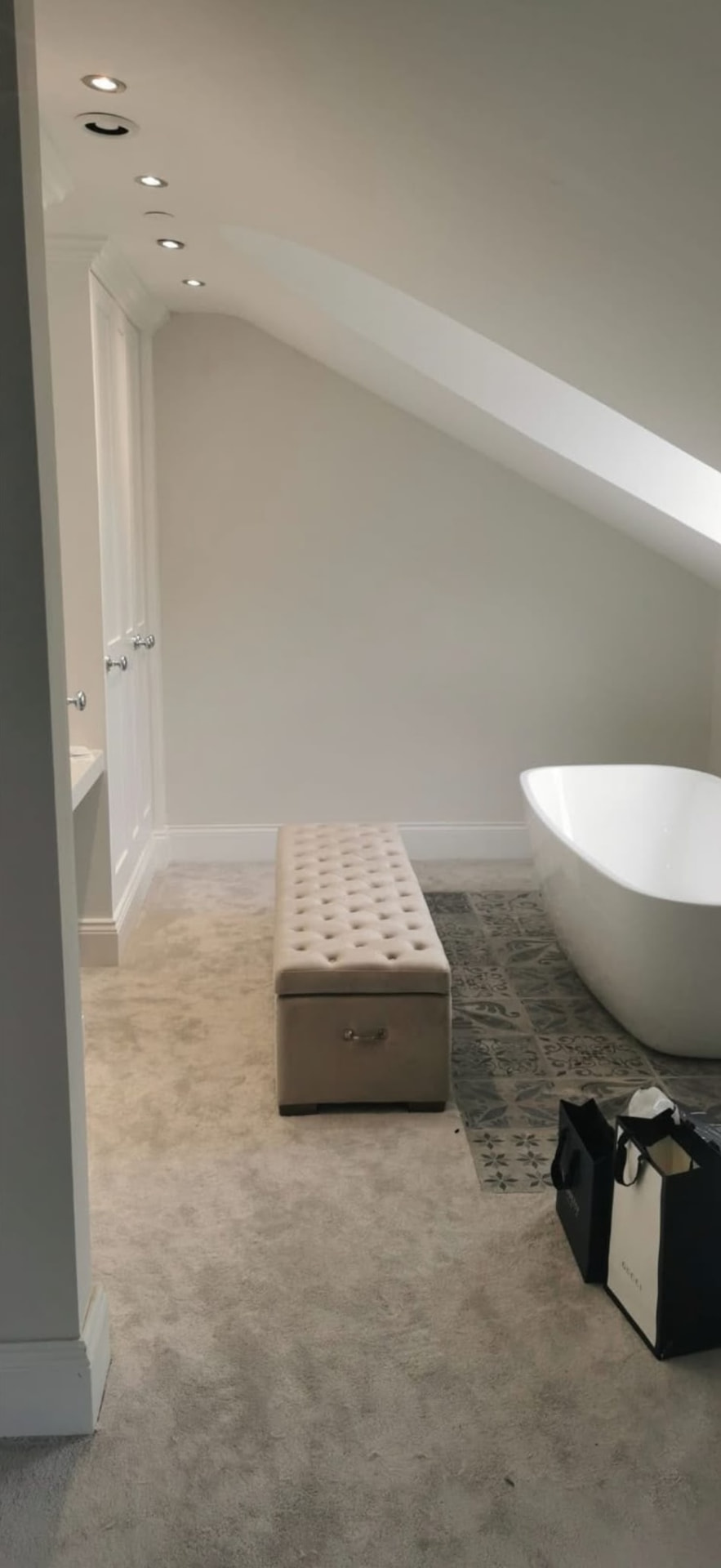
Ceiling Repairs
A ceiling that is coming away is not a decorating job. It gets stabilised, repaired and skimmed back to a single seamless surface, so you stop watching it and start forgetting about it.
See this service →
Overboarding across the west of Scotland
Covering Glasgow, Paisley, Rutherglen, Bearsden, Clydebank, Bishopbriggs, Cambuslang, Renfrew, Newton Mearns and the surrounding towns. You can also see recent work, read the customer reviews, find out more about Ryan or head back to the homepage.
The Guarantee
What the 1–2 year workmanship guarantee actually covers
Every job carries £1 million public liability cover and a written 1–2 year workmanship guarantee. The terms are set out plainly below, so you know exactly where you stand before any work starts.
Covered
- Adhesion issues, where the plaster fails to bond as it should
- Blistering in the finished surface
- Debonding, commonly called blown plaster
- Plaster coming away from the wall
Not covered
- Structural movement in the building
- Cosmetic settlement cracking
- Shrinkage
- Damp or moisture caused by occupancy, such as a lack of ventilation or drying washing indoors
- Overboarding onto an existing unstable ceiling, which cannot be guaranteed because of the risk of movement behind the new boards
Next Step
Cover that tired ceilingproperly, not cosmetically
Free quote, usually the same day, with an honest answer on whether your ceiling should be overboarded or taken down. £1 million public liability cover and a 1–2 year workmanship guarantee.
- 22 years on the trowel, 10 self-employed
- 5-star rated on MyBuilder across 124 reviews
- £1 million public liability cover
- 1–2 year workmanship guarantee on workmanship
Request Your Free Quote
Free, no-obligation quotes, usually turned around the same day.
No obligation. No pressure. Straight answer on price and timings.