
Coving in Glasgow
Coving installationin GlasgowTight mitres, invisible joints
The finishing detail that makes a room look designed rather than decorated; fitted level, mitred tight and filled so cleanly that the only thing you notice is the shadow line.
5-star rated on MyBuilder (124 reviews)Free quotes, usually same day
22 years
On the trowel, time-served
5★ · 124
Verified MyBuilder reviews
£1 million
Public liability cover
1–2 years
Workmanship guarantee
Same day
Free quote turnaround
Service Overview
What coving does for a room
Coving is the moulded run that bridges the join between wall and ceiling. Practically, it covers the one junction in every room that is almost never perfectly straight and almost always cracks. Visually, it gives a room a defined top edge, softens the transition overhead and makes ceilings read taller and rooms read finished.
It is one of the cheapest changes with the biggest effect. A plain box bedroom with a clean cove run around it looks considered; the same room without it looks like a shell. And unlike most cosmetic upgrades, coving is permanent; fitted properly it never needs anything except the occasional coat of paint.
The work is more precise than it appears. Rooms are rarely square, walls are rarely plumb and ceilings are rarely level, so every run has to be measured, cut and eased into the actual geometry of the room rather than the theoretical one. Mitres at internal and external corners have to close tight, and joints along long runs have to disappear completely.
Ryan fits and finishes coving as part of a plastering job or as a standalone piece of work, with all joints and mitres filled, sanded and left ready for the decorator.
Who it is for
- Homeowners upgrading a plain modern room with no ceiling detail
- Anyone plastering a room who wants the whole finish done at once
- Landlords and sellers looking for a high-impact, low-cost improvement
- People replacing coving damaged during a refit or rewire
When it is needed
- A hairline crack keeps reappearing along the wall-to-ceiling line
- A room feels bare or unfinished at the top
- Existing coving has been damaged, painted solid or badly joined
- You are already plastering and want the room completed in one visit
The Cost Of Waiting
Why badly fitted coving is worse than none
Coving sits at eye height for everybody standing in the room, and it runs in a straight line, which means every error is measured against a perfect reference. A mitre that is two millimetres open, a run that drifts down along a wall, or a joint that has been filled and left proud is visible from the doorway and stays visible forever.
The other failure mode is adhesion. Coving fixed onto dusty, painted or wallpapered surfaces without keying or adhesive coverage eventually opens along the top or bottom edge. You get a fine dark line following the run, which reappears within weeks every time it is filled, because the cove itself is moving.
There is also the DIY spiral: a mitre saw, a couple of lengths, and the discovery that the room is not square. What starts as a Saturday job becomes filler-heavy corners, wavy lines and, eventually, the cost of taking it all down and having it done properly. Material is cheap; the second attempt is not.
Common mistakes that make it worse
Cutting mitres at 45 degrees regardless
Corners in real houses are rarely 90 degrees. Mitres have to be cut to the actual angle, or the joint opens on one side and gets filled: permanently visible.
Fixing onto wallpaper or loose paint
The adhesive is only as strong as what it is stuck to. Surfaces need keying back to something sound, or the run drops away at the edges.
Skimping on adhesive coverage
Dabs instead of continuous beads leave hollow sections that flex, crack the joint lines and sound hollow when tapped.
Filling joints and leaving them proud
Filler that is not cut back and blended into the profile shows as a bulge along the run under any side light.
Our Process
Five steps from first callto a guaranteed finish
- 01
Step 1 – Inspection and measure
Room geometry checked, corner angles, wall plumb, ceiling level, and existing surfaces assessed for whether they will hold coving without preparation.
- 02
Step 2 – Diagnosis and quote
Profile and size recommended to suit the room and ceiling height, with a fixed price for smaller jobs or a day rate for whole-property work. Free and usually returned the same day.
- 03
Step 3 – Preparation
Floors sheeted, lines snapped so the run stays true, surfaces keyed and cleaned back to a sound base, and lengths cut and dry-fitted to the actual angles of the room.
- 04
Step 4 – Fitting
Continuous adhesive application, coving pressed home along the line, mitres closed tight, and butt joints staggered and bonded so they disappear along the run.
- 05
Step 5 – Finishing, verification and guarantee
Joints and mitres filled and blended into the profile, edges cleaned off, the run sighted along its length for straightness, waste removed and the room swept. Workmanship guaranteed for 1–2 years.
What You Get
The difference it makes,stated plainly
A permanent fix for the ceiling crack line
Coving bridges the wall-to-ceiling junction, which is where seasonal cracks appear in most homes.
Rooms read taller and more finished
A defined top edge gives the eye somewhere to stop, and gives a plain room the presence it was missing.
High impact for low cost
Among the cheapest changes that visibly lift a room, particularly in flats and new-builds with no existing detail.
Ready to paint
Joints and mitres are filled and blended so the decorator paints rather than fixes.
Fitted to your actual room
Angles cut to the real geometry, runs sighted straight, so nothing drifts or opens over time.
Insured and guaranteed
£1 million public liability cover and a 1–2 year workmanship guarantee on the work carried out.
In Detail
Profiles, materials and how coving is actually run
Most domestic coving is either gypsum-based plaster coving or lightweight alternatives. Plaster coving has weight and crispness, holds a sharp profile and takes filler in exactly the same way the surrounding plaster does, which is why mitres can be made to vanish. Lightweight polystyrene and polyurethane covings are easier to handle and suit specific situations, but they do not finish with the same density of edge. For rooms being plastered anyway, gypsum coving is almost always the right call because the whole junction then behaves as one material.
Size is proportional. A standard 100–127mm cove suits typical modern ceiling heights; larger profiles, 135mm and above, suit tenement and period rooms with high ceilings, where a small cove looks lost. Simple concave profiles suit contemporary rooms, while stepped and moulded profiles read as period detail. Getting the proportion right is the difference between coving that looks original and coving that looks stuck on.
The fitting itself is a geometry job. Lines are marked on wall and ceiling so the run has a fixed reference and cannot drift; corner angles are measured rather than assumed, and mitres are cut to the bisected angle. Long walls are run with staggered butt joints bonded with adhesive so they can be filled flush. Around obstacles, boxed pipework, beams, chimney breasts, bulkheads, sections are scribed to fit rather than gapped and filled. The final pass is a sight down each run: any drift shows against the ceiling line long before a tape measure finds it.
Materials used
Gypsum plaster coving
The standard for domestic work: crisp edges, takes filler like plaster, mitres finish invisibly.
Coving adhesive
Gypsum-based adhesive applied in continuous beads on both contact faces for full bond and no hollow sections.
Jointing and finishing compounds
Used to fill mitres and butt joints, then cut back and blended to the profile so the line disappears.
Fixings and support
Temporary support or mechanical fixings where runs are long, heavy or fitted to less absorbent surfaces.
Variations of the work
Standard concave coving
Simple curved profile in 100–127mm, the everyday choice for bedrooms, lounges and hallways.
Large-profile coving
Deeper runs for high-ceilinged tenement and period rooms where a standard cove looks undersized.
Coving with new plastering
Fitted as part of a room plaster or re-skim so the whole junction is completed in one visit.
Repair and replacement runs
Damaged sections cut out and replaced, or old painted-solid coving removed and replaced with a crisp profile.
Where this work typically applies
- New-build and modern flats with no ceiling detail at all
- Tenement rooms where original detail was lost in past refits
- Rooms being re-plastered where the junction needs finishing
- Hallways and stairwells where runs must stay true over long lengths
- Bedrooms and lounges being upgraded before a sale or let
- Rooms where the wall-to-ceiling crack keeps returning
Domestic work is the priority: single rooms through to full house and flat refurbishments. Larger commercial contracts are not the focus, so your job is not queued behind a site.
Questions, Answered Straight
Coving Installation in Glasgow- the things people ask
How much does coving cost in Glasgow?
Coving is normally priced per job at a fixed price for a room or a set of rooms, so you know the figure before work starts. Whole-property coving is usually a day rate. Give the room sizes and ceiling heights and a free quote normally comes back the same day.
How long does it take to cove a room?
A standard room is commonly a single day including fitting and filling, sometimes with a short return visit to finish the joints depending on the room and the profile. Multiple rooms are sequenced so fitting and finishing flow together.
Can coving be fitted to an already decorated room?
Yes. Floors and furniture are sheeted and the run line is keyed back to a sound surface before fitting. The only extra step is that painted surfaces need preparing so the adhesive grips properly.
What size coving suits my room?
Standard 100–127mm profiles suit typical modern ceiling heights. High-ceilinged tenement and period rooms usually need a deeper profile so the run looks proportionate rather than lost. Ryan will advise based on the actual room.
Will the joints and corners be visible?
They should not be. Mitres are cut to the real corner angle, joints are bonded and staggered, and everything is filled and blended into the profile so a painted run reads as one continuous piece.
Does coving stop cracks appearing?
It bridges the wall-to-ceiling junction, which is where most seasonal cracking shows up in homes, so in practice it removes the visible symptom permanently. It is not a fix for structural movement, and that is covered separately in the guarantee terms.
Can you remove old coving and replace it?
Yes. Old, damaged or paint-clogged coving is taken off, the junction made good, and new coving fitted and finished. Making good is included in the quote rather than added afterwards.
Is coving guaranteed?
Yes: the workmanship carries a 1 to 2 year guarantee covering adhesion and debonding. Structural movement and settlement cracking sit outside that cover, as with all the plastering work.
Do I need to paint it myself?
Coving is left filled, blended and ready for the decorator. Painting is not included, but you will get clear advice on when the filled areas are ready to take paint.
Which areas do you fit coving in?
Glasgow and the surrounding towns, including Paisley, Rutherglen, Bearsden, Clydebank, Bishopbriggs, Cambuslang, Renfrew and Newton Mearns.
Related Work
Often done at the same time
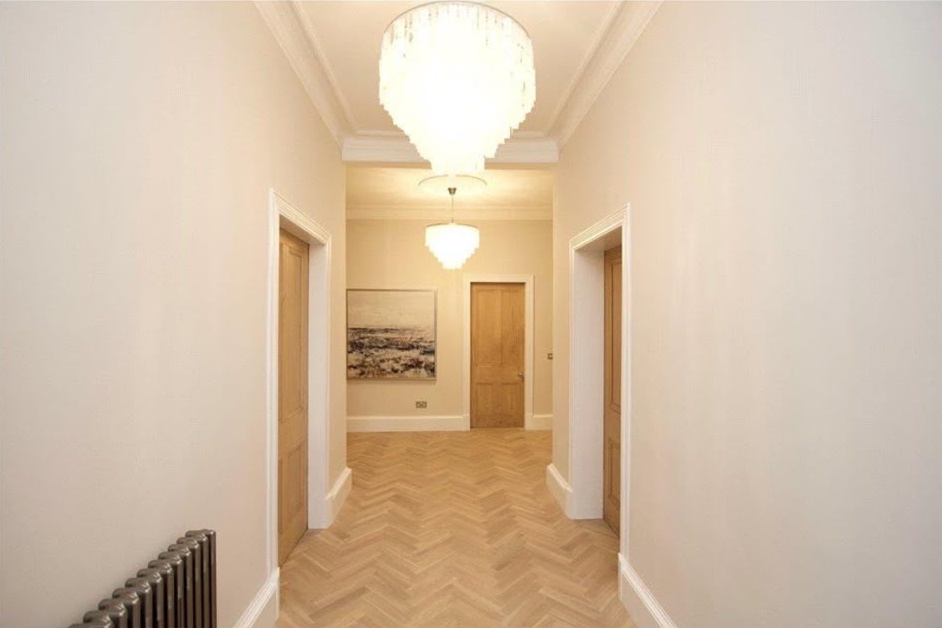
Cornicing
The ornate run that makes a Glasgow tenement room what it is; repaired where it is broken, matched where it is missing, and cleaned back so the profile reads sharp again.
See this service →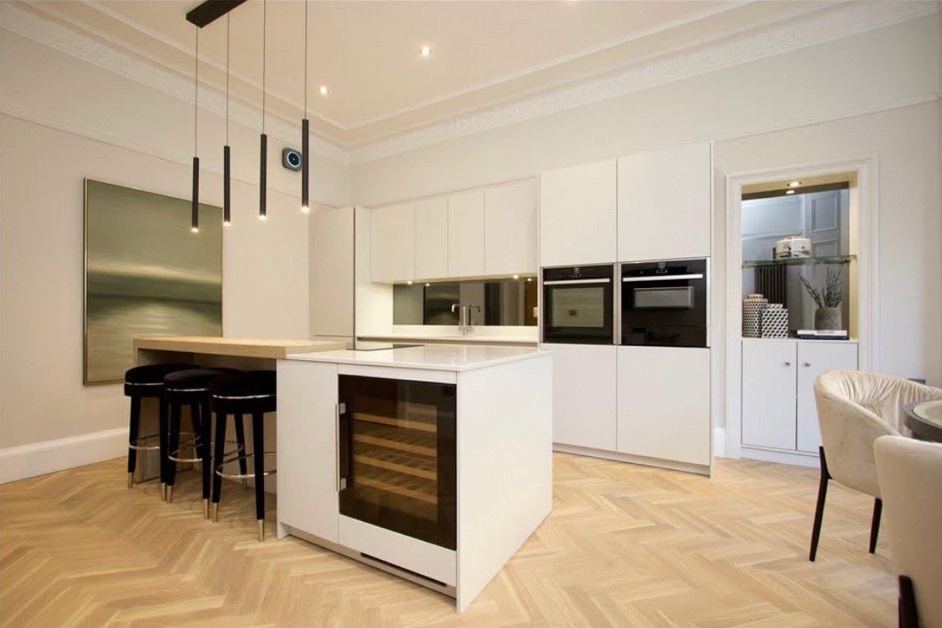
Plastering
Rooms handed back straight, smooth and ready for paint, without weeks of disruption, without dust through the whole house, and without chasing a tradesman who stopped answering.
See this service →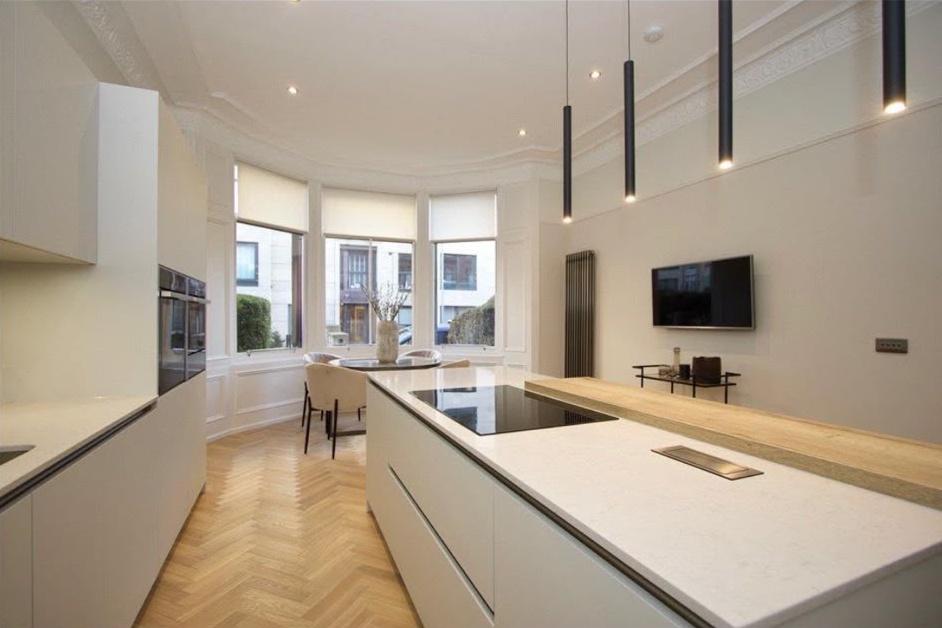
Skimming & Re-Skimming
A thin coat of finish plaster over what you already have: the fastest, least disruptive way to turn a patched, rippled or artexed surface into a wall that looks like it was built yesterday.
See this service →
Coving Installation across the west of Scotland
Covering Glasgow, Paisley, Rutherglen, Bearsden, Clydebank, Bishopbriggs, Cambuslang, Renfrew, Newton Mearns and the surrounding towns. You can also see recent work, read the customer reviews, find out more about Ryan or head back to the homepage.
The Guarantee
What the 1–2 year workmanship guarantee actually covers
Every job carries £1 million public liability cover and a written 1–2 year workmanship guarantee. The terms are set out plainly below, so you know exactly where you stand before any work starts.
Covered
- Adhesion issues, where the plaster fails to bond as it should
- Blistering in the finished surface
- Debonding, commonly called blown plaster
- Plaster coming away from the wall
Not covered
- Structural movement in the building
- Cosmetic settlement cracking
- Shrinkage
- Damp or moisture caused by occupancy, such as a lack of ventilation or drying washing indoors
- Overboarding onto an existing unstable ceiling, which cannot be guaranteed because of the risk of movement behind the new boards
Next Step
Finish the room properly- get a price for coving
Free, no-obligation quote, usually back the same day. Fixed pricing on smaller jobs, £1 million public liability cover and a 1–2 year workmanship guarantee.
- 22 years on the trowel, 10 self-employed
- 5-star rated on MyBuilder across 124 reviews
- £1 million public liability cover
- 1–2 year workmanship guarantee on workmanship
Request Your Free Quote
Free, no-obligation quotes, usually turned around the same day.
No obligation. No pressure. Straight answer on price and timings.