
Plastering in Glasgow
Plastering in GlasgowWalls and ceilingsfinished dead flat
Rooms handed back straight, smooth and ready for paint, without weeks of disruption, without dust through the whole house, and without chasing a tradesman who stopped answering.
5-star rated on MyBuilder (124 reviews)Free quotes, usually same day
22 years
On the trowel, time-served
5★ · 124
Verified MyBuilder reviews
£1 million
Public liability cover
1–2 years
Workmanship guarantee
Same day
Free quote turnaround
Service Overview
What plastering actually gives you
Plastering is the layer every other finish sits on. Paint, wallpaper, skirting, coving, spotlights and shelving all take their line from the wall behind them, so a room that has been plastered properly looks finished before a single tin of paint is opened. A room that has not been plastered properly shows it under every light in the house.
The work itself covers new plaster onto bare or boarded walls and ceilings, fresh plaster over old surfaces that have been patched too many times, and full-room plastering as part of a refurbishment. Surfaces are prepared and stabilised first, angles and beads are set true, then the plaster is applied in coats and polished up as it sets so the finish comes off the trowel flat rather than being sanded flat afterwards.
Ryan Glenn has been on the trowel for around 22 years, roughly 10 of those working for himself, and the work is almost entirely domestic: single rooms, hallways and stairwells, flat and house refurbishments, and the awkward patch repairs other trades would rather not take on. The person who quotes your job is the person who does it.
Every job includes floors and fittings sheeted before work starts, waste bagged as it is produced, and the room swept and left clean at the end of each day. Customers on MyBuilder mention the tidiness almost as often as the finish.
Who it is for
- Homeowners redecorating a room that will not take paint evenly any more
- Buyers and landlords getting a tired property ready to live in, let or sell
- Anyone mid-renovation who needs boarded walls turned into finished walls
- People who have had a bad experience with a previous trade and want it put right
When it is needed
- Walls are covered in filler patches, old adhesive or blown plaster
- You have taken off wallpaper and found a surface no paint will save
- A wall or chimney breast has been removed and the scar needs blending in
- New plasterboard has gone up and needs a finish coat
- Paint keeps flaking, bubbling or showing every ripple under low light
The Cost Of Waiting
What it costs you to leave it
Bad plaster does not stay still. Once a surface has blown, the bond between plaster and wall has already failed, and every knock, every temperature swing and every roller pass pulls a little more of it away. What starts as one hollow-sounding patch behind the sofa becomes a wall that cannot hold a fixing.
Decorating over the top of it is the expensive mistake. You pay for paint, for a decorator's time and for the disruption twice, because the flaws telegraph straight back through the new finish. Rippled walls also swallow money in furniture and fittings; skirting that will not sit tight, kitchen units packed out with shims, wardrobes with a visible gap along the top.
There is a resale cost too. Surveyors and buyers read patched, cracked and uneven walls as deferred maintenance, and they price the whole property accordingly. A room that has been plastered properly reads as a house that has been looked after.
Common mistakes that make it worse
Filling instead of plastering
Filler shrinks, sits proud of the surrounding surface and flashes under emulsion. Over a whole wall you spend more on tubs and sanding than a skim would have cost.
Skimming over a surface that is not sound
New plaster is only as stable as what it is applied to. Skim over blown, dusty or oily surfaces and the new coat comes away with the old one.
Rushing the drying time
Sealing fresh plaster with a full coat of vinyl emulsion before it has dried traps moisture and causes peeling. A thinned mist coat first is the difference between a finish that lasts and one that flakes in a fortnight.
Accepting a price with no scope attached
A number with no explanation of preparation, coats or making good is how jobs grow halfway through. Every RGP quote spells out what is included before you commit.
Our Process
Five steps from first callto a guaranteed finish
- 01
Step 1 – Inspection
Ryan looks at the actual rooms: surface condition, damp signs, how sound the existing plaster is, where the light falls and what the walls need to carry afterwards. Most quotes are free and turned around the same day.
- 02
Step 2 – Diagnosis and quote
You get a straight explanation of what needs doing and why, with a fixed price for smaller jobs so the number cannot move on you, or a day rate for larger projects. No 'from' pricing and no pressure to decide on the spot.
- 03
Step 3 – Protection and preparation
Floors and fittings are sheeted, loose and blown material is taken back to a sound base, surfaces are sealed or bonded as required, and beads and angles are fixed straight before any finish goes on.
- 04
Step 4 – Plastering
Plaster is applied in coats and worked as it sets, with the angles, reveals and arrises cut sharp. The finish is polished up on the trowel so the surface comes out flat, not sanded into shape afterwards.
- 05
Step 5 – Verification, clean-up and guarantee
The finished surfaces are checked under a light for shadows and hollows, waste is removed, the room is swept out, and the work carries a 1–2 year workmanship guarantee. You also get clear advice on drying times before you decorate.
What You Get
The difference it makes,stated plainly
A surface that takes paint first time
Flat, polished plaster means a mist coat and two topcoats, not three attempts and a bag of filler.
Rooms back in days, not weeks
Single rooms are usually a one to two day job. Ryan works long shifts to finish rather than stretching a job across your calendar.
One tradesman, start to finish
No subcontractors and no rotating crews. The standard does not slip between the quote and the last trowel pass.
Fully covered work
£1 million public liability cover, plus a 1–2 year workmanship guarantee on adhesion, blistering and debonding.
Money saved on everything that follows
Straight walls cut decorator time, stop units and skirting needing packed out, and prevent paying twice for the same finish.
A house handed back clean
Sheeted before, bagged during, swept after. Reviews mention the tidiness as often as the workmanship.
In Detail
The detail behind a proper plastering job
Most Glasgow housing stock falls into two camps, and each needs a different approach. Tenement and pre-war properties usually have lath and lime or dense solid backgrounds where suction is unpredictable, one wall drinks the moisture out of the plaster while the next holds it. New-build and modern extensions are almost always plasterboard, where the issue is joint treatment and board movement rather than suction. The material choice, the bonding and the timing all follow from that.
Backgrounds are controlled before anything is applied. Highly absorbent brick and block get a bonding agent or a diluted PVA to even out suction; dense, smooth or painted surfaces get a high-grip bonding coat so the finish has something to key into. Where the base is badly out of true, an undercoat plaster is applied and ruled off to bring the wall back to a plane before the finish coat goes near it.
The finish itself is a two-coat application worked through its set: laid on, flattened, then troweled up as it firms so the surface densifies rather than being polished with water. Overworking a finish or bringing water to the face causes crazing and dusting later. Angles are formed with beads where they need protecting, and reveals and returns are cut sharp so the room reads square under artificial light.
Materials used
Multi-finish and board finish plaster
Gypsum finish plasters for internal walls and ceilings: board finish over plasterboard, multi-finish over mixed or undercoated backgrounds.
Bonding and browning undercoats
Used to build out and level uneven solid walls, or to key onto smooth, low-suction backgrounds before finishing.
PVA, bonding agents and primers
Suction control on absorbent brick and block, and grip on dense or previously painted surfaces.
Beads, mesh tape and scrim
Galvanised or stainless angle beads on external corners, stop beads at reveals, and scrim over board joints so hairline cracking is designed out.
Variations of the work
Plastering onto bare masonry
Undercoat to level and a finish coat over the top: the standard route for stripped-back tenement and solid-wall rooms.
Plastering onto new plasterboard
Joints scrimmed and a two-coat board finish, the usual finish for extensions, loft conversions and stud walls.
Patch plastering and making good
Chases, removed chimney breasts, socket and pipe scars filled in and blended so the repair disappears into the surrounding wall.
Whole-property plastering
Room-by-room programme through a flat or house refurbishment, sequenced around joiners, electricians and plumbers.
Where this work typically applies
- Tenement flats and period properties with lath, lime or solid backgrounds
- New-build rooms, extensions and loft conversions on plasterboard
- Rooms stripped back after wallpaper removal has destroyed the surface
- Kitchens and bathrooms being refitted where walls must be true for units
- Rental properties being turned around between tenants
- Homes being prepared for sale where every room needs to present well
Domestic work is the priority: single rooms through to full house and flat refurbishments. Larger commercial contracts are not the focus, so your job is not queued behind a site.
Questions, Answered Straight
Plastering in Glasgow- the things people ask
How much does plastering cost in Glasgow?
Smaller jobs are quoted at a fixed price for the job, so the number cannot move on you once work starts. Larger projects are usually priced on a day rate, because scope varies enormously from property to property. There are deliberately no 'from' prices on this site: a guess based on a photo helps nobody. Send the room sizes and you will get a real number, usually the same day.
How long does it take to plaster a room?
A single average room, walls and ceiling, is commonly one to two days on site. Rooms that need an undercoat to level them, or that have significant repair work first, take longer. You will be told the realistic timescale at quote stage rather than being given an optimistic number.
How long before I can paint fresh plaster?
Plaster needs to dry right through, not just look dry. Depending on the room, the thickness, the season and ventilation, that is usually anywhere from a few days to a couple of weeks. Start with a thinned mist coat rather than a full-strength emulsion, otherwise you seal moisture in and the paint peels.
Do I need to move out while the work is done?
For single rooms, no. Work is contained to the room being plastered, floors and fittings are sheeted, and the space is swept at the end of each day. For a full house refurbishment it is easier if the property is empty, but plenty of jobs are done room by room around people living there.
Is the plastering guaranteed?
Yes: a 1 to 2 year workmanship guarantee covering adhesion problems, blistering, debonding and plaster coming away from the wall. It does not cover structural movement, cosmetic settlement cracks, shrinkage, or damp caused by ventilation and drying habits.
Are you insured?
Yes. RGP Ryan Glenn Plastering carries £1 million public liability cover, and Ryan is a sole trader, so the person insured is the person on site.
How messy is plastering?
Less than most people expect. Floors and fittings are covered before anything starts, waste is bagged as work progresses and removed, and the room is swept out at the end of each day. Tidiness is one of the most repeated points across the 124 five-star MyBuilder reviews.
Can you fix a wall another plasterer got wrong?
Yes, and it is a regular request. The first step is establishing whether the existing coat is sound enough to work over or needs taking off. You will get an honest answer either way, because skimming over a failed surface only buys a few months.
Do you cover my area?
Glasgow and the surrounding towns, including Paisley, Rutherglen, Bearsden, Clydebank, Bishopbriggs, Cambuslang, Renfrew and Newton Mearns. If you are just outside that list it is usually still possible: ask.
Can you fit the work in urgently?
Often, yes. Quotes come back the same day in most cases, and jobs have been fitted in around house sales, tenant changeovers and family visits before. Call and ask what the current diary looks like rather than assuming.
Related Work
Often done at the same time
Skimming & Re-Skimming
A thin coat of finish plaster over what you already have: the fastest, least disruptive way to turn a patched, rippled or artexed surface into a wall that looks like it was built yesterday.
See this service →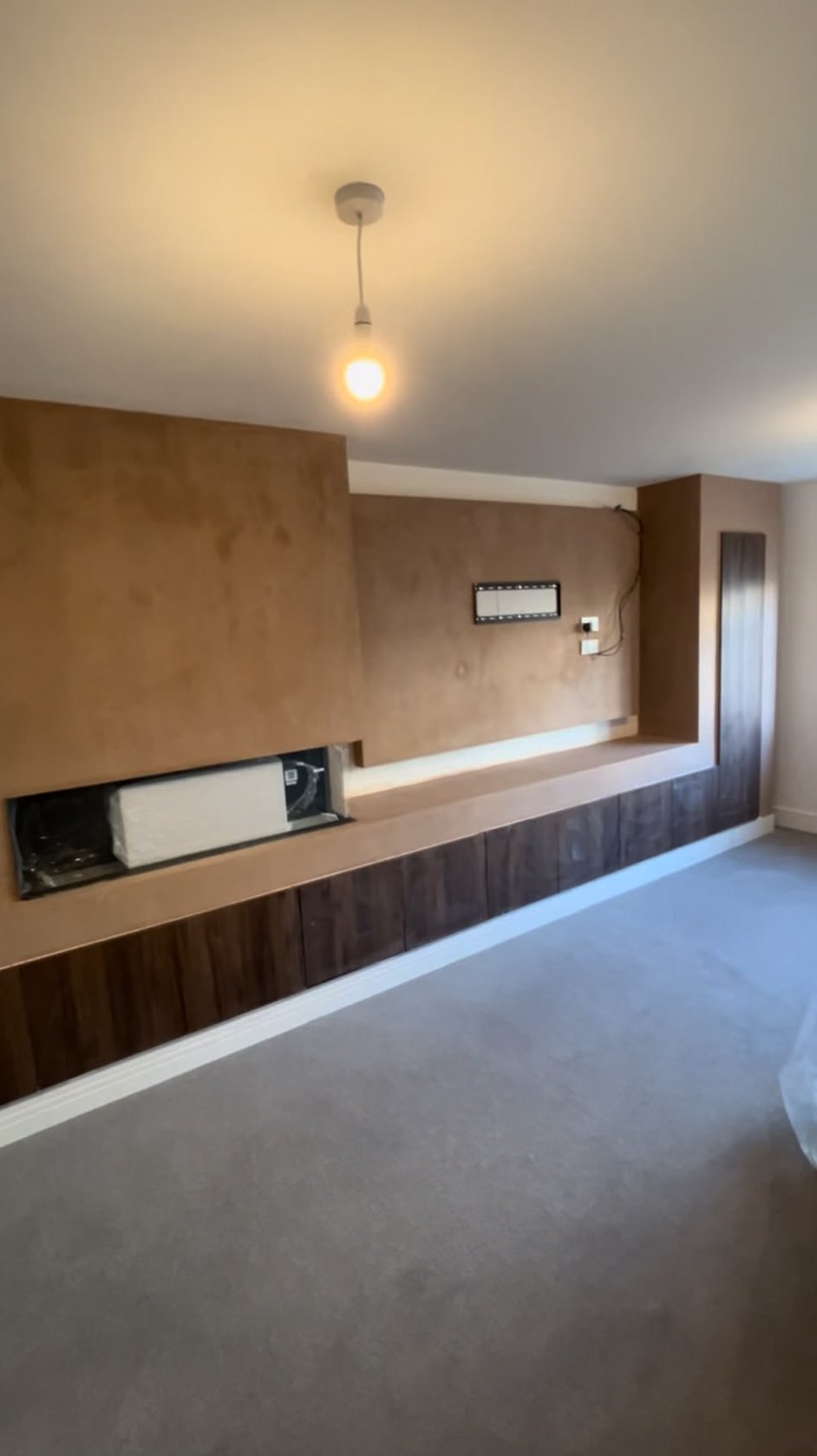
Dry Lining & Dot and Dab
Straight, warm, sound-deadened walls built over what you already have: the quickest way to turn a cold, uneven or unusable surface into a room-ready wall without wet-trade drying times.
See this service →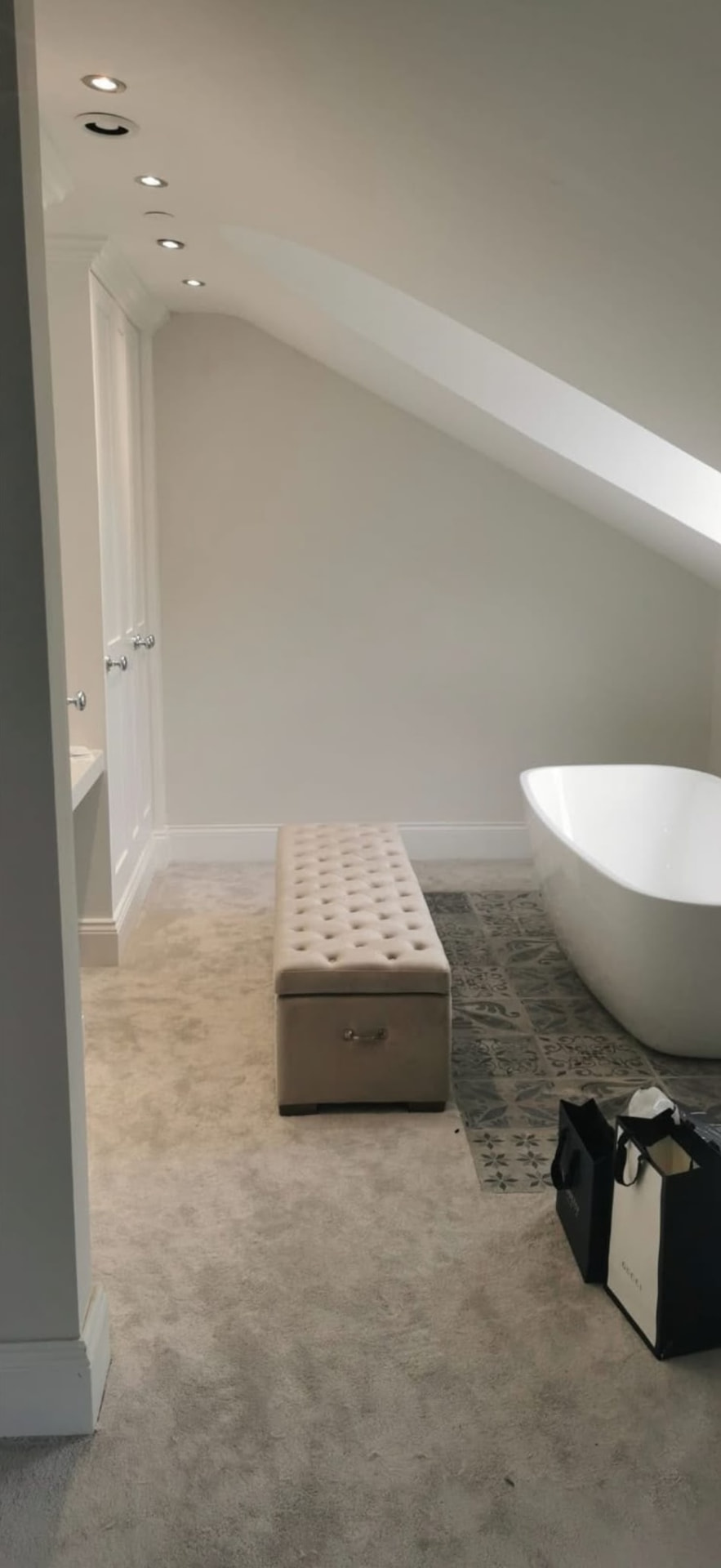
Ceiling Repairs
A ceiling that is coming away is not a decorating job. It gets stabilised, repaired and skimmed back to a single seamless surface, so you stop watching it and start forgetting about it.
See this service →
Plastering across the west of Scotland
Covering Glasgow, Paisley, Rutherglen, Bearsden, Clydebank, Bishopbriggs, Cambuslang, Renfrew, Newton Mearns and the surrounding towns. You can also see recent work, read the customer reviews, find out more about Ryan or head back to the homepage.
The Guarantee
What the 1–2 year workmanship guarantee actually covers
Every job carries £1 million public liability cover and a written 1–2 year workmanship guarantee. The terms are set out plainly below, so you know exactly where you stand before any work starts.
Covered
- Adhesion issues, where the plaster fails to bond as it should
- Blistering in the finished surface
- Debonding, commonly called blown plaster
- Plaster coming away from the wall
Not covered
- Structural movement in the building
- Cosmetic settlement cracking
- Shrinkage
- Damp or moisture caused by occupancy, such as a lack of ventilation or drying washing indoors
- Overboarding onto an existing unstable ceiling, which cannot be guaranteed because of the risk of movement behind the new boards
Next Step
Get your walls straight,get your rooms back
Free, no-obligation quote, usually the same day. Fixed price on smaller jobs, day rate on bigger projects, £1 million public liability cover and a 1–2 year workmanship guarantee on every job.
- 22 years on the trowel, 10 self-employed
- 5-star rated on MyBuilder across 124 reviews
- £1 million public liability cover
- 1–2 year workmanship guarantee on workmanship
Request Your Free Quote
Free, no-obligation quotes, usually turned around the same day.
No obligation. No pressure. Straight answer on price and timings.